Mold in Kagoshima Buildings: Find the Moisture Source and Prevent Recurrence
2026/09/26

A Step-by-Step Mold Response for Homes and Buildings in Kagoshima
Record the moisture pattern and verify repairs under similar conditions.
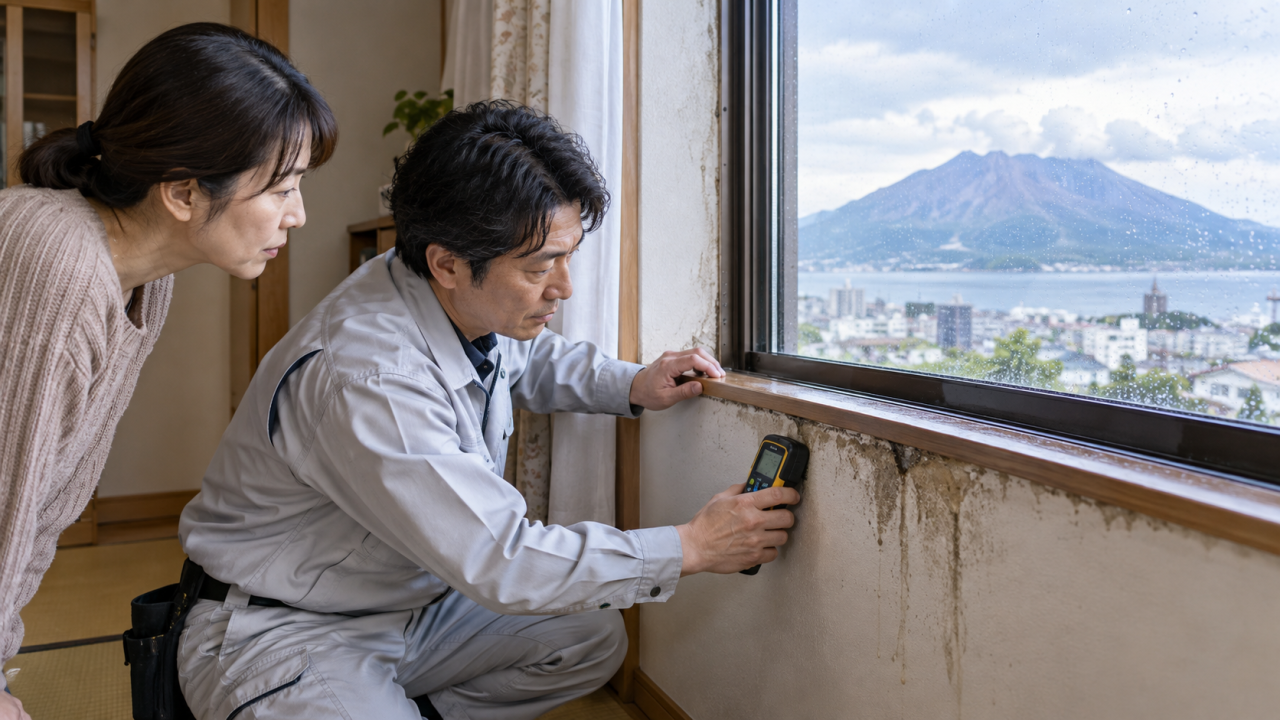
A stain below a window, a musty storage room, or mold returning after cleaning can have different causes. In Kagoshima, the right response depends on the particular building, the timing of the moisture, and the materials that became wet. A city name or a dark color on a wall cannot identify the source by itself. This guide explains a practical sequence for homeowners, tenants, and building managers: document what you see, identify where water enters or condenses, choose a safe cleanup scope, repair the moisture problem, and check the same location again under similar conditions. If someone has persistent respiratory or allergic symptoms, seek medical advice separately; a building inspection cannot diagnose an illness.
Start with evidence before wiping the surface
Take one photo showing the entire room and another showing the affected material closely. Record the date, location, approximate area, odor, and whether the surface is wet. Note what happened before the stain appeared: heavy rain, use of a sink or shower, air-conditioner operation, or a cold morning with condensation. This record helps distinguish a recurring water source from a single spill. It also gives a landlord, property manager, or repair contractor enough detail to prioritize an inspection. Do not open a wall or remove ceiling material simply to find an answer; concealed utilities and structural components may require qualified investigation.
A useful first question is whether the visible growth is limited to a washable surface or whether porous building materials are wet. A small mark on bathroom tile differs from a stained gypsum board ceiling. The latter may involve water above the surface, and repainting it can conceal rather than solve the problem. Color alone cannot identify a mold species or predict a person's health response. A laboratory test may have a defined purpose in some projects, but testing is not a substitute for finding and repairing a leak.
Trace water by its timing and location
Moisture may come from rain entering around a roof or window, a plumbing leak, an air-conditioner drain, condensation on a cool surface, or water rising into a low area. Check when the area becomes wetter. If a wall changes after rain, look at the exterior and window assembly. If it changes after a sink is used, check accessible plumbing and ask a professional to inspect concealed pipework. If droplets appear only on a window in the morning, compare indoor temperature and humidity with the temperature of that surface. These patterns are clues, not final diagnoses. More than one source may be present.
Kagoshima buildings vary widely: detached houses, apartments, commercial premises, and older structures have different drainage and ventilation details. Even neighboring rooms can behave differently when one faces an exterior wall or has furniture pressed against it. Avoid assuming that every case is caused by the region's weather. Record site conditions and use building plans, maintenance records, and observations to identify the actual path of water. In a rental property, report leaks and moisture promptly to the owner or manager. In a condominium, confirm which components are managed by the unit owner and which involve the building management body before altering windows, pipes, or exterior walls.
| Observation | Possible next check | Immediate priority |
|---|---|---|
| Droplets on a window at dawn | Surface temperature, ventilation, indoor moisture | Dry the surface and record recurrence |
| Ceiling stain after rain | Roof, exterior joints, upper-level drainage | Notify the building manager and locate the leak |
| Wet cabinet near a sink | Supply and drain connections | Stop the leak and dry the material |
| Odor when cooling starts | Filter, condensate pan and drain, nearby wall | Arrange appropriate equipment inspection |
Understand what humidity numbers can and cannot tell you
The US Environmental Protection Agency (EPA) advises keeping residential relative humidity below 60% where possible, ideally around 30–50%, as part of mold prevention. This is general guidance, not a guarantee that a wall cannot get wet at a lower room reading. A digital meter in the center of a room may show a moderate value while a cold window frame or the space behind a wardrobe has condensation. Measure temperature and humidity consistently, record where and when you measured, and inspect the surface itself. The presence of recurring water on a material matters more than a single number.
Ventilation helps remove moisture from cooking, bathing, and laundry, but it does not repair a broken pipe or failed roof flashing. Check that exhaust fans work and that supply openings and filters are not blocked. Outdoor conditions also matter; leaving windows open during rain will not necessarily dry a room. A dehumidifier can help reduce moisture in the air, but it should be treated as support while the water source is investigated. If a wall, floor, or ceiling stays wet, ask a qualified person to assess the material and repair method.
Decide what can be cleaned and what needs a professional
For a small area on a hard surface, cleaning may be practical after the water source is addressed. Read the surface and product instructions, ventilate the area, use gloves and eye protection, and dry it thoroughly. Do not mix cleaning chemicals or exceed labeled quantities. Avoid vigorous dry brushing that may disperse dust. People with asthma or other health concerns should consult a health professional before taking on cleanup. Children and vulnerable occupants should not be assigned the work.
The EPA notes that residential mold areas larger than about 10 square feet, roughly 0.9 square meters, or situations with substantial water damage deserve professional attention. This is US general guidance, not a Japanese legal threshold. Even a smaller mark may need specialist investigation if water is hidden behind a wall, the material repeatedly becomes wet, or a strong odor persists. Porous materials such as ceiling tiles, carpet, or some wall components may not be restored by a surface wipe. The appropriate scope depends on material condition and the depth of moisture.
In a building with extensive water damage, the sequence is especially important. Stop the incoming water, protect occupants from electrical or falling-material hazards, document the affected area, remove or dry damaged materials as appropriate, and verify that the source has been repaired before finishing surfaces. If the water came from sewage or another contaminated source, use contractors equipped for that situation. Painting over visible growth without correcting moisture may hide the problem temporarily while damage continues.
Coordinate repair, cleanup, and restoration
Ask a contractor to separate the scope into investigation, leak repair, containment or protection of adjacent rooms, mold removal, drying, replacement of damaged materials, and post-work inspection. A quotation for "mold treatment" alone may omit roof or plumbing repairs. If different companies handle water intrusion and remediation, identify who confirms that the structure is dry enough for reconstruction. Keep photos from before and after work, readings with their locations, product information, and the date when the repaired area will be checked again.
The MIST method or any other proprietary cleaning technique should be evaluated against the actual material and moisture source. Ask what the method can reach, whether it requires occupants to leave temporarily, how sensitive materials and nearby equipment will be protected, and how drying will be confirmed. No surface treatment can stop a new leak on its own. Claims that a procedure will cure a person's cough or guarantee that mold will never return go beyond what a building service can establish. Medical questions belong with clinicians; building work should focus on moisture and material condition.
Recheck when the original conditions return
Inspect the same area a few days after work, after the next significant rain, and after running the equipment that was associated with the problem. Use similar photo angles and record temperature, humidity, and surface moisture when relevant. If a ceiling was repaired for a rain leak, a dry inspection on a sunny afternoon is useful but incomplete. If condensation appeared during cooling, repeat the check during comparable operation. This makes recurrence easier to identify and reduces the chance of declaring success too early.
For ongoing maintenance, assign simple checks to the places that have previously become wet: window frames, air-conditioner drains, under-sink cabinets, exterior-facing storage, and low areas. Keep gutters, drains, and ventilation equipment in the building's maintenance plan. Residents should know whom to contact if a leak returns and what photos are useful. A good handover record makes the next inspection faster when staff or tenants change.
Frequently asked questions
**Is black mold automatically more dangerous?** No. Appearance alone does not establish species, exposure, or a person's health effect. Treat visible growth as a sign to investigate moisture, and ask a clinician about symptoms rather than self-diagnosing from a color.
**Should I test the air before repairing a leak?** Usually the visible leak or wet material already gives a reason to act. Sampling has limitations because results vary by location, time, weather, and ventilation. If a test is proposed, ask what decision its result will change. Do not postpone obvious water repairs while waiting for a species name.
**Can an air purifier or dehumidifier solve the problem?** These devices may support air or humidity management, but neither fixes a roof, window, or plumbing leak. If a material repeatedly gets wet, locate and repair that source. Clean and maintain the devices according to their instructions as well.
**What should I send to a building manager or specialist?** Provide wide and close photos, dates, the affected room and materials, approximate area, odor, whether water is present, the connection with rain or equipment use, and previous repairs. If health symptoms are involved, share that fact without expecting the building contractor to diagnose them.
The durable solution is not a single spray or a single humidity target. It is a sequence that connects evidence, water-source repair, appropriate cleanup, drying, and follow-up under the conditions that caused the original damage.
Sources: US EPA, A Brief Guide to Mold, Moisture and Your Home; US EPA, Mold Cleanup in Your Home; CDC/NIOSH, Health Problems Associated with Damp Buildings.
------------------------------------------------------------------------------------------------------------------------
カビ取り・カビ対策専門業者MIST工法カビバスターズ本部
0120-052-127(平日9時から17時)
カビの救急箱
【検査機関】
一般社団法人微生物対策協会
------------------------------------------------------------------------------------------------------------------------