Why International Visitors Notice Mould in Japan|Hotel Guide
2026/09/30
Hotels, ryokan and holiday rentals sometimes receive a complaint that surprises the operator: an overseas guest notices a musty smell or a small damp stain immediately, while previous Japanese guests said nothing. Does this mean foreign visitors are biologically more sensitive to mould than Japanese people?
The evidence does not support a broad conclusion based on nationality. Individual susceptibility matters far more. Asthma, mould allergy, immune status, previous sensitisation, age and the amount of exposure can change how a person responds. However, visitors from countries where dampness and mould are widely discussed as housing health hazards may recognise and report warning signs earlier. Japan’s humid climate, unfamiliar room operation, a short travel schedule and the need to communicate through photographs or review platforms can add to that impression.
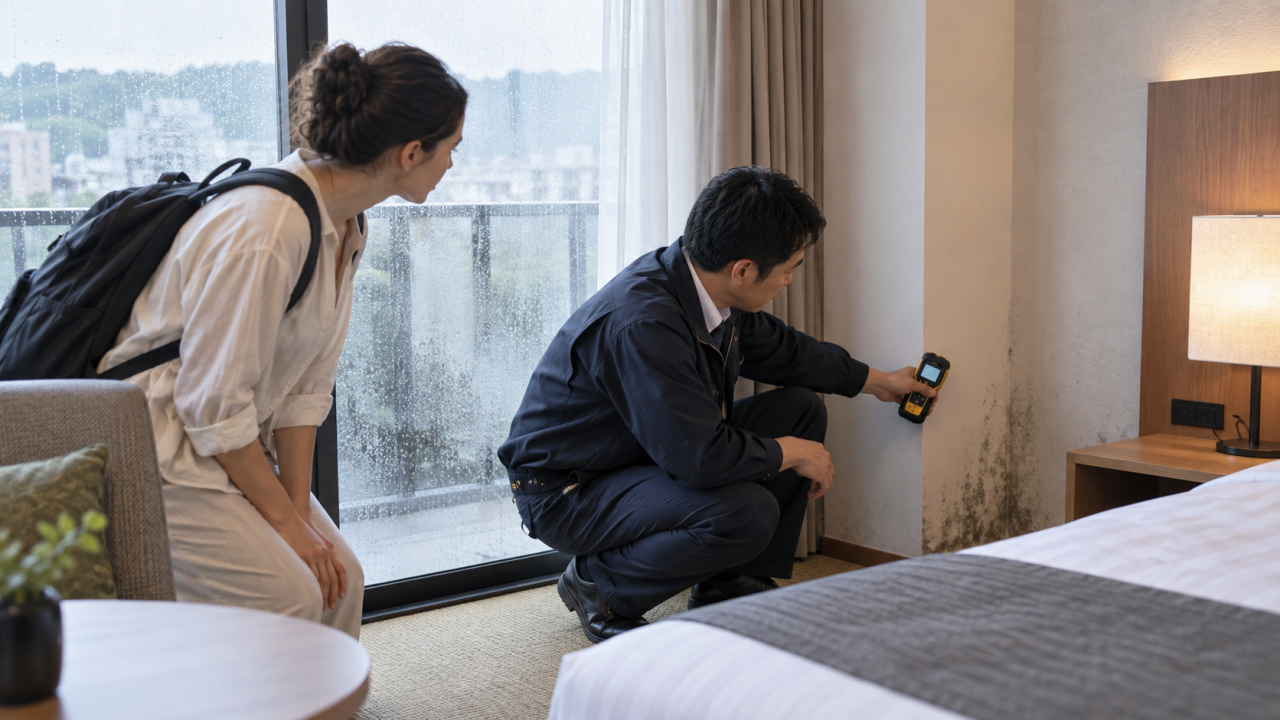
Treat a guest report as useful building information, not as a stereotype about nationality.
This article separates established health evidence from reasonable explanations of reporting behaviour and gives accommodation operators a practical inspection and response plan.
Direct answer: sensitivity, awareness and travel conditions overlap

An early report can reveal moisture problems before they affect more rooms and guests.
Several different factors are often compressed into the statement “foreign guests are sensitive to mould.” The first is medical susceptibility: a person with asthma or mould allergy may react to a level that does not cause symptoms in someone else. The second is awareness: some visitors have been taught to regard visible growth, damp staining, condensation and musty odour as housing hazards that should be reported. The third is environmental unfamiliarity: Japan’s rainy season, humid summer, air-conditioning patterns and compact wet areas may be very different from the guest’s home environment.
Travel also changes behaviour. A guest who will leave the next morning cannot observe the room for a week. They may need an immediate room change and may use photographs, booking messages or an online review to create a record across a language barrier. To the operator, these combined factors can look like a difference in national biology when they are better understood as differences between individuals, prior knowledge and circumstances.
| What the operator observes | What should actually be checked | Appropriate response |
|---|---|---|
| “A foreign guest is sensitive” | Asthma, allergy, age, immune status and exposure | Ask about the individual situation |
| Immediate reaction to odour | Hidden dampness, HVAC, drainage and materials | Investigate the source before deodorising |
| Strong or written complaint | Health awareness, language and travel schedule | Document facts and explain the response |
| Negative review | Speed, clarity, alternative room and recurrence | Track the room until the source is corrected |
Reason 1: asthma, allergy and other individual health factors
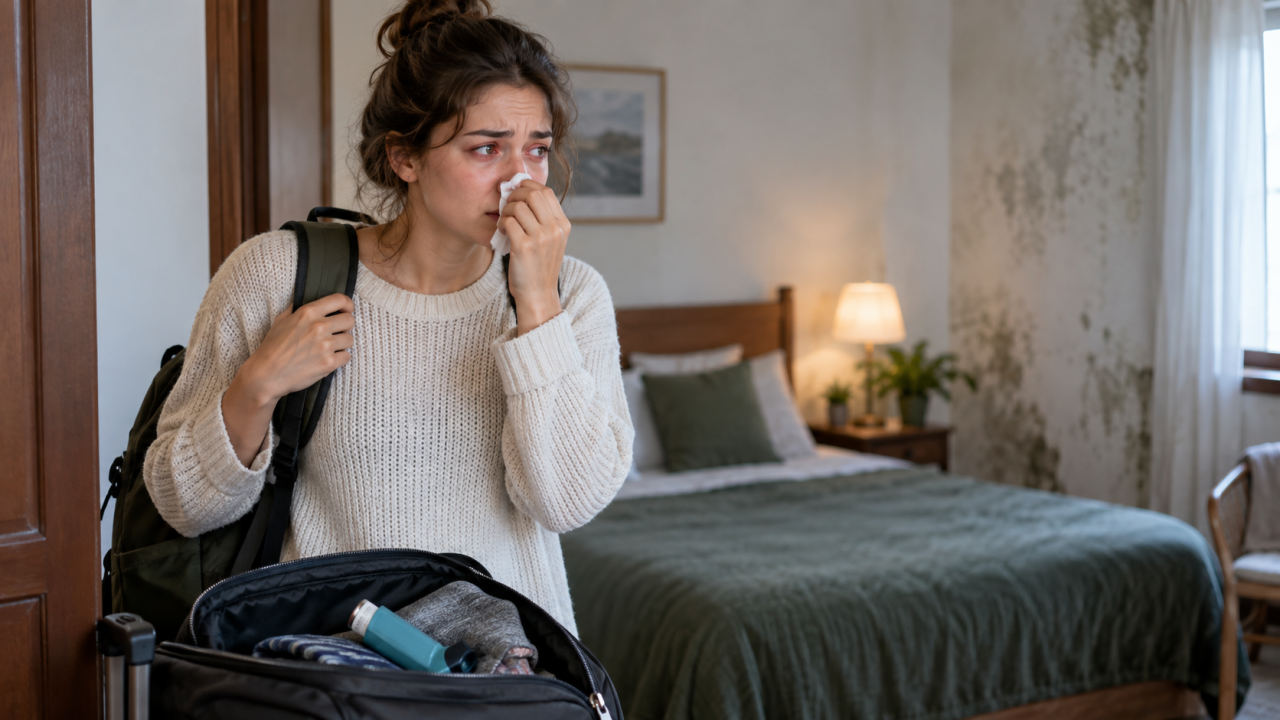
Response varies between individuals and cannot be predicted from nationality.
WHO reports increased respiratory symptoms, allergies and asthma in damp or mouldy buildings. The US CDC describes associations between damp buildings and respiratory symptoms, the development or worsening of asthma, hypersensitivity pneumonitis, allergic rhinitis and other conditions. A person already sensitised to mould may respond to a small exposure.
Other people may enter the same room without symptoms. Absence of symptoms does not prove the building is free of mould, and the onset of a cough does not by itself prove that mould caused it. Pollen, dust mites, fragrance, cleaning chemicals, smoke, infection and temperature change may produce overlapping symptoms. Medical diagnosis belongs to healthcare professionals.
Operators should therefore collect individual facts rather than guess from nationality. Ask when and where the odour or symptom began, whether it improves away from the room, whether visible dampness or growth is present, and whether the person has asthma or a serious allergy. Severe breathing difficulty or a serious asthma episode requires medical assistance while the building issue is investigated.
Questions for a guest report
• Where and when was the odour, staining or symptom first noticed?
• Were the eyes, nose, throat, skin or breathing affected?
• Does the condition improve outside the room?
• Is there a history of asthma or severe allergy?
• Is there visible growth, condensation or water staining near windows, HVAC or the bathroom?
• Is urgent medical support needed?
Reason 2: mould is taught and regulated as a housing health issue abroad
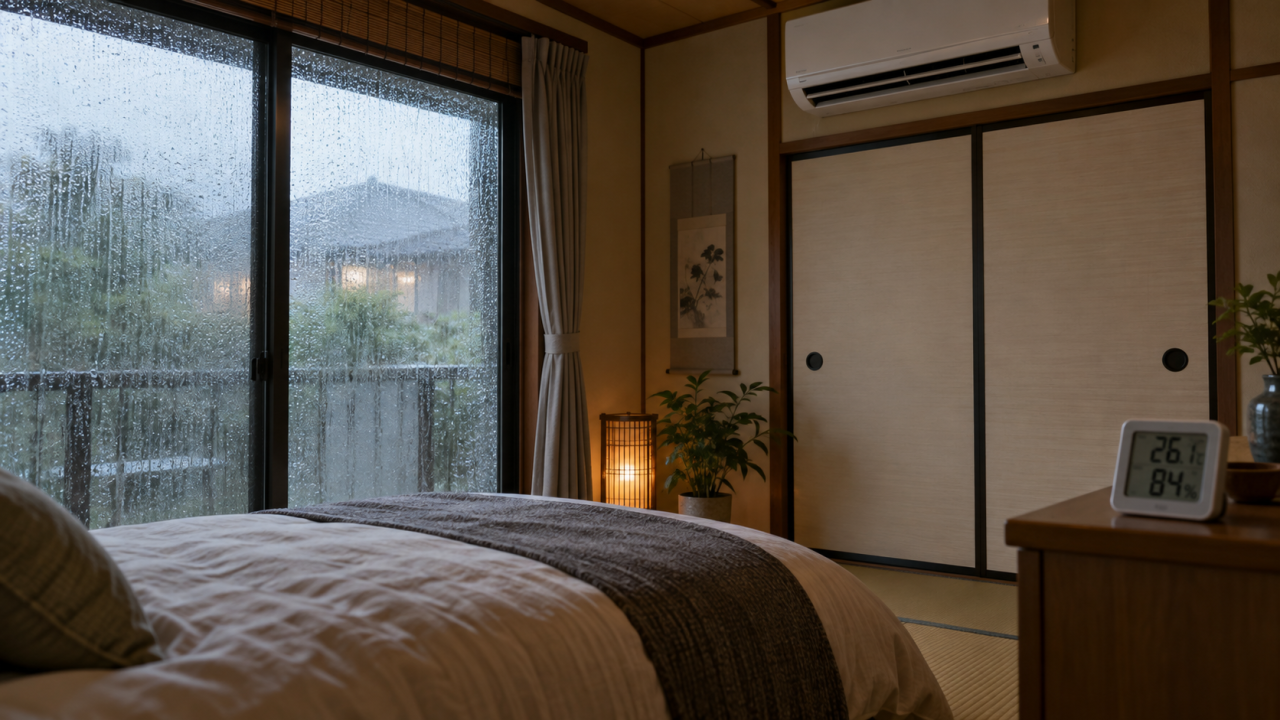
Guests from a dry climate or a centrally conditioned home may not expect Japan’s rapid humidity changes.
US EPA teaches that moisture control is the key to mould control and advises drying wet materials within 24 to 48 hours. Health Canada advises fixing moisture problems and removing mould, and explains that no single safe limit can account for individual sensitivity. England treats damp and mould as housing health hazards and has introduced defined response duties for serious hazards in social housing.
People who regularly encounter this guidance may interpret black spotting, peeling wallpaper, condensation and musty odour as building defects that should be reported. That is a difference in risk awareness and reporting habits, not proof of a biological difference between nationalities.
Japanese operators may become accustomed to minor bathroom discolouration or seasonal condensation. Familiarity, however, does not make a room safe. A Japanese guest’s silence does not prove there is no problem, and an overseas guest’s early report should not be dismissed as an overreaction.
Reason 3: Japan’s humidity and room operation may be unfamiliar
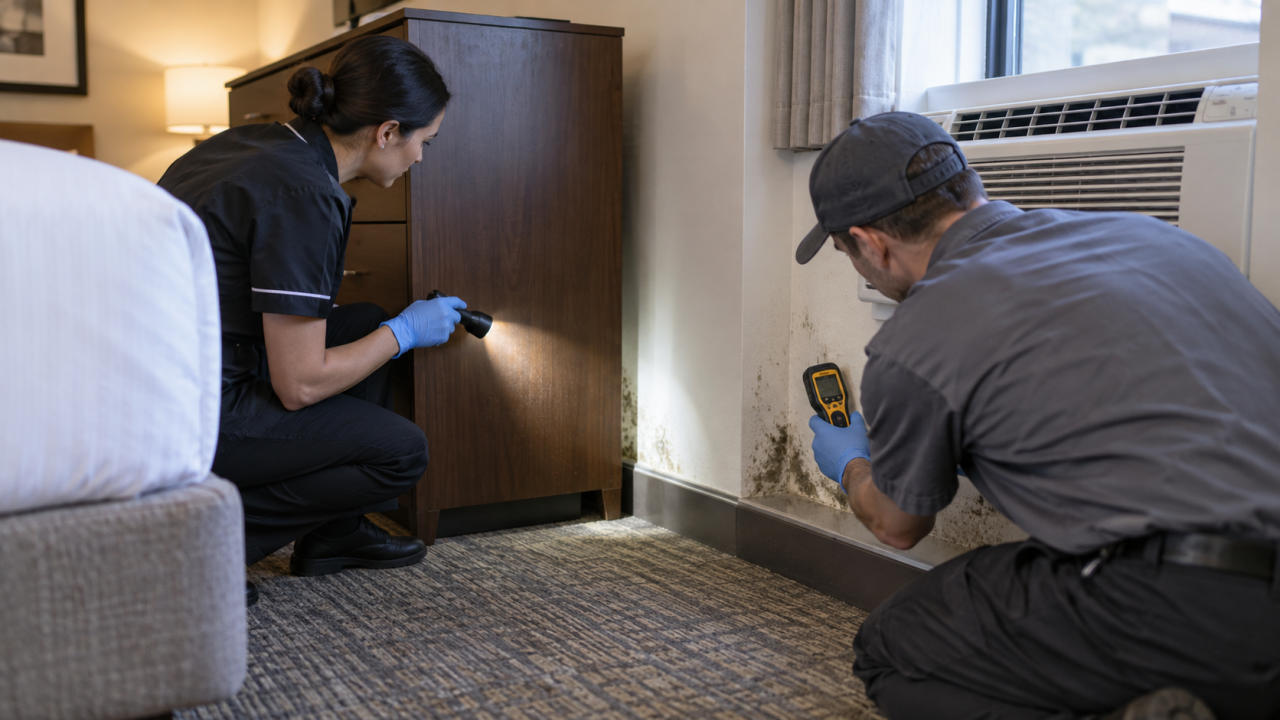
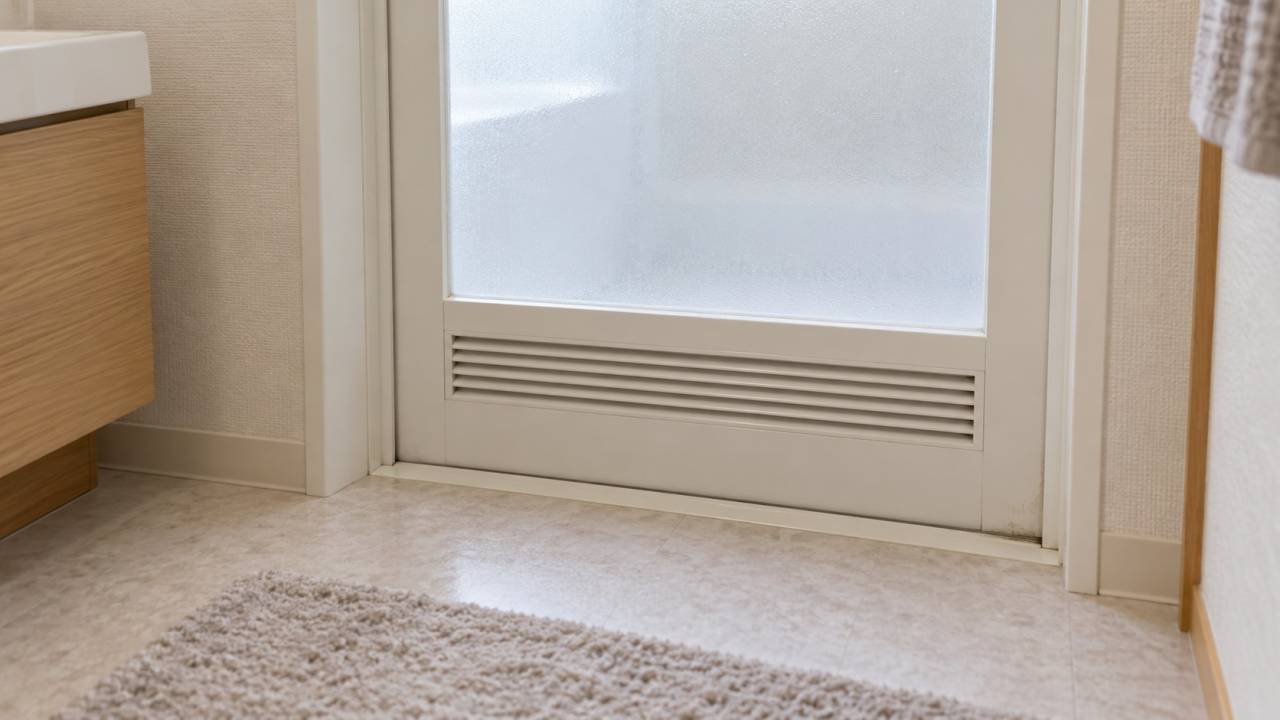
Inspection should include concealed and poorly ventilated locations, not only visible wall surfaces.
During Japan’s rainy season and summer, outdoor air can be warm and humid. Opening a window may introduce more moisture instead of drying the room. Condensation can form on cooled windows, walls and pipes. Moisture becomes trapped behind furniture, inside wardrobes, under beds, behind curtains and around air-conditioning systems.
Guests may switch off the air conditioner while out, dry wet clothing indoors or take long showers without knowing the building’s ventilation design. These actions can increase humidity, but routine guest behaviour should not cause recurring mould in a well-managed room. Instructions should help guests use the equipment without transferring responsibility for a building defect to them.
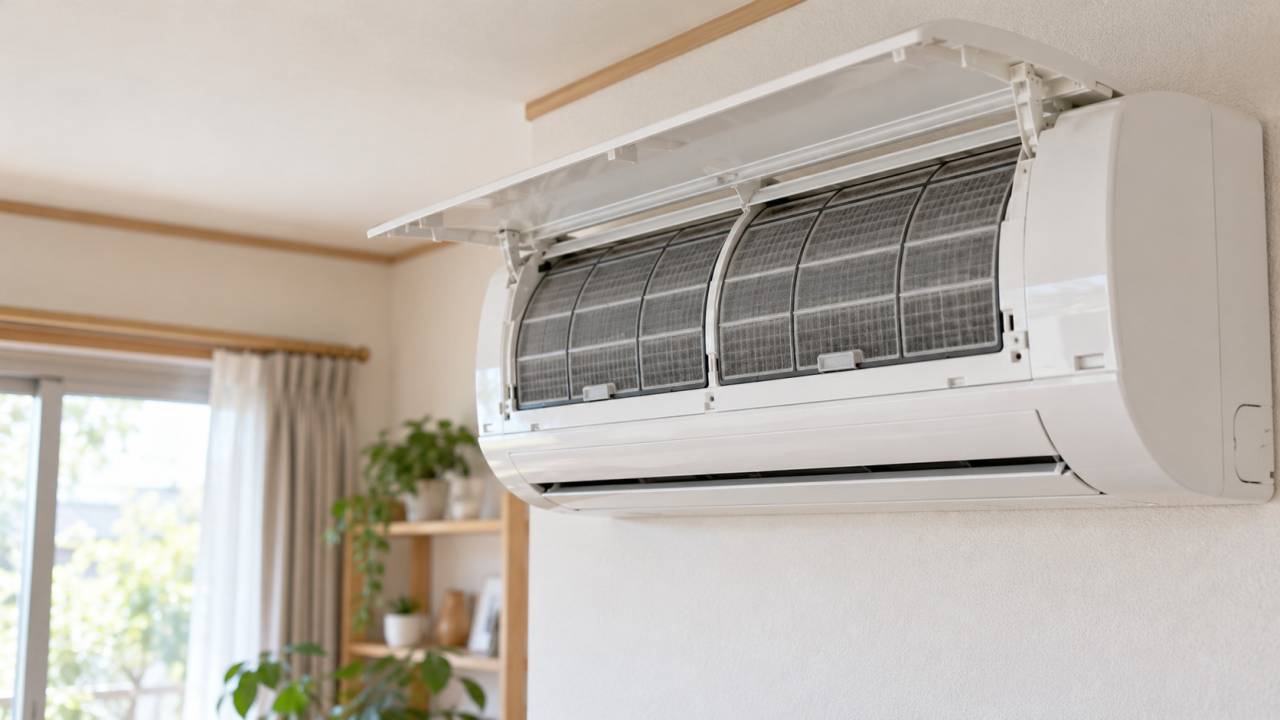
Staff should inspect HVAC heat exchangers, filters and drains; exterior-wall furniture backs; window sills; curtains; mattress undersides; bathroom ceilings; exhaust fans; plumbing and drainage. A single humidity reading is less informative than data collected after bathing, during vacancy and after cooling stops.
| Location | Common mechanism | Warning sign |
|---|---|---|
| Air conditioner | Condensation, dirty drain or coil | Odour at start-up and spotting at the outlet |
| Window or exterior wall | Temperature difference and insulation | Condensation, lifting wallpaper and stained skirting |
| Behind furniture | Low airflow and cold exterior surface | Musty odour and growth on backing boards |
| Bathroom | Insufficient extraction and drying time | Darkening on ceiling, seals and door frame |
| Wardrobe | Closed space and blocked airflow | Odour on opening and spotting on leather goods |
Reason 4: travellers must make a safety decision quickly

Photographs and booking messages can be the most practical record when time and language are limited.
At home, a person may observe a stain for several days. A traveller may leave the city in the morning. If a child begins coughing or a room smells strongly musty late at night, requesting another room is a reasonable risk-management decision. The traveller may also be protecting an older companion or someone with asthma.
A language barrier encourages written messages and photographs. An online review can become a record of the concern and the operator’s response. Treating that record as evidence that one nationality “complains more” misses the operational lesson.
Record the time, room number, exact location, visible signs, odour, reported symptoms, photographs, temperature and humidity, HVAC state, alternative room and investigation result. Explain what was confirmed, what immediate step was taken and what further inspection will occur. A clear factual response builds more trust than a generic translated assurance that there is “no problem.”
Recommended first response
1. Listen and identify the location, odour and health concern.
2. If breathing symptoms are severe, move the guest away and arrange medical support.
3. Offer an equivalent or better alternative room when possible.
4. Remove the room from sale until the source is investigated.
5. Inspect HVAC, walls, furniture backs, bathroom and water-damage history.
6. Explain the verified facts and next action in a language the guest understands.
Five responses accommodation operators should avoid
Do not cover a musty odour with fragrance. Fragrance can irritate some guests and does not remove moisture. Do not wipe only the visible spot and immediately sell the room again; growth may remain behind wallpaper, in gypsum board, behind furniture or in HVAC equipment.
Do not say that mould is unavoidable because Japan is humid. Climate contributes to risk but does not replace building maintenance. Do not dismiss the report because of nationality or culture. Finally, do not use one low air-sample result as proof that the room has no problem. Fungal release varies by place and time, and concealed contamination may not appear in a short sample.
| Avoid | Why it fails | Do instead |
|---|---|---|
| Masking odour with fragrance | Source remains and fragrance may irritate | Inspect moisture, materials and HVAC |
| Wiping only the surface | Concealed contamination can recur | Define depth and affected materials |
| Blaming the climate | Prevents correction of building causes | Record condensation, leaks and ventilation |
| Judging by nationality | Misses individual health risk | Assess the person and environment |
| Relying on one number | Ignores sampling limits and concealed growth | Combine inspection, odour and moisture data |
A mould-prevention system for international hospitality

Housekeeping, maintenance and reception should use one reporting and escalation process.
Moisture control is the foundation. Track room humidity, condensation, leaks, HVAC drainage, ventilation and drying time. Connect observations across housekeeping, engineering and reception. If housekeeping notices an odour but maintenance never receives the report, the moisture source will remain. Comparing room-specific complaints with maintenance and seasonal data can reveal a pattern.
Multilingual room guidance can explain ventilation controls, bathroom extraction, handling wet clothing and how to report odour or staining. The wording should remain helpful and should not blame guests. A facility should withstand normal accommodation use without persistent microbial growth.
Monthly facility checklist
• Review mould, odour and condensation reports by room.
• Inspect HVAC filters, coils and drains.
• Check furniture backs, exterior walls, windows, wardrobes and under beds.
• Verify bathroom extraction rate and run time.
• Record leak, repair and wallpaper-replacement history by room.
• Monitor long-vacant or closed rooms.
• Update multilingual reporting and medical-emergency guidance.
• Refer recurring or concealed cases for specialist investigation.
What MIST Method® Mold Busters can do
MIST Method® Mold Busters Headquarters supports hotels, ryokan, holiday rentals, dormitories and training facilities. We combine visual findings, odour, moisture history, temperature and humidity, HVAC and material conditions and, when useful, fungal testing to define the source and remediation area. Treatment is planned with attention to the affected material and recurrence mechanism.
Repeated complaints in the same room, odour after cleaning, smell only when HVAC starts, or similar growth across multiple rooms may indicate a problem beyond routine surface cleaning. We can help organise investigation, source correction, mould removal, preventative treatment and verification around facility operations.
Frequently asked questions
Are overseas visitors more likely to have mould allergy?
Nationality alone cannot answer that question. Asthma, allergy, age, immune status and previous sensitisation are more relevant. Population statistics should not be used to predict an individual guest’s response.
Does a musty smell prove that mould caused a health problem?
No. Odour is an important building-investigation clue, but it does not establish a medical diagnosis. Building assessment and medical evaluation serve different purposes.
Can a room stay in service if no mould is visible?
Strong odour, water damage or HVAC-related smell justifies checking concealed spaces, furniture backs, ceiling voids and equipment. Absence of visible growth alone is not enough.
When should a specialist be called?
Seek specialist advice for recurrence, extensive growth, strong odour, water damage, concealed or HVAC contamination, multiple affected rooms or health-related reports.
Conclusion: turn a guest report into building intelligence
International visitors may appear more sensitive because medical susceptibility, prior mould education, unfamiliar humidity, time pressure and communication behaviour overlap. The explanation is not nationality alone.
For accommodation operators, the useful question is not “Why do foreigners complain?” but “What occurred in this room, and how do we prevent recurrence?” Record odour, condensation, staining, HVAC state, water history and symptom timing. An early report can reveal a defect before more guests encounter it.
Meeting the Architectural Institute of Japan’s maintenance criteria
MIST Method® Mold Busters selects the applicable criteria in AIJES-A0002, the Architectural Institute of Japan’s standard on the design and maintenance of indoor air with regard to microbial contamination, according to the building use, fungal category and sampling method. Remediation, prevention and post-treatment verification are planned so that the treated environment can meet the selected criteria. Conditions are defined before work, and post-treatment measurements are made under comparable conditions.
The applicable value differs by building use, whether airborne, settled or surface fungi are being assessed, and the sampling conditions. Verification against a referenced criterion does not mean that the Architectural Institute of Japan certifies or endorses MIST Method®. It is also not an unconditional guarantee against future recurrence or health effects. Correcting leaks, condensation and other moisture sources, followed by ongoing maintenance, remains essential to maintaining a compliant indoor environment.
• Architectural Institute of Japan|AIJES-A0002-2013 and AIJES-A0008-2013
Primary sources
• WHO Guidelines for Indoor Air Quality: Dampness and Mould
• US EPA: Can mold cause health problems?
• UK Government: Damp and mould guidance
• Australian Government enHealth guidance
• Japan National Tourism Organization: Visitor Statistics
This article provides general building-environment information and is not a medical diagnosis. Seek medical care for serious breathing symptoms.
------------------------------------------------------------------------------------------------------------------------
カビ取り・カビ対策専門業者MIST工法カビバスターズ本部
0120-052-127(平日9時から17時)
カビの救急箱
【検査機関】
一般社団法人微生物対策協会
------------------------------------------------------------------------------------------------------------------------