CPAP and Bedroom Mold: A Practical Guide
2025/11/30

CPAP and Bedroom Mold: A Practical Guide
Separate medical advice, equipment care and building inspection.
If you use CPAP and notice dampness or mold in your bedroom, there are three separate questions: whether your symptoms need medical attention, whether your equipment needs checking, and whether the building has a moisture problem. This guide helps you prepare those conversations. It does not assess your treatment or certify that room air is safe.
Do not stop prescribed therapy or change settings based on a building inspection or this article. Ask your treating clinician about treatment concerns, and contact your equipment provider about suspected contamination or device problems.
目次
Start with the right point of contact
Different concerns need different expertise.
Tell your clinician about persistent discomfort and when it occurs. Tell the equipment provider if you notice an unusual smell, visible contamination, damage or a problem with the mask, tubing or water chamber. A building contractor can investigate damp walls or recurring room mold, but cannot diagnose a device fault or a medical condition.
Keep a short timeline of symptoms, equipment maintenance and room observations. A change in symptoms at home is information to share, not proof that mold is the cause.
What CPAP use does not tell us about mold risk
Avoid assumptions based on pressurized airflow.
This article does not establish that CPAP users inhale more mold than other people, develop symptoms sooner, or benefit from routine home fungal testing. Pressurized airflow alone is not evidence for those claims. Individual health concerns require clinical advice.
Do not use a room mold count to decide whether treatment should continue. If the device itself may be contaminated, ask the prescribing team or equipment provider what to do with that specific model. Building remediation is not a substitute for equipment servicing.
Bedroom areas worth observing
Record visible moisture without disturbing building materials.
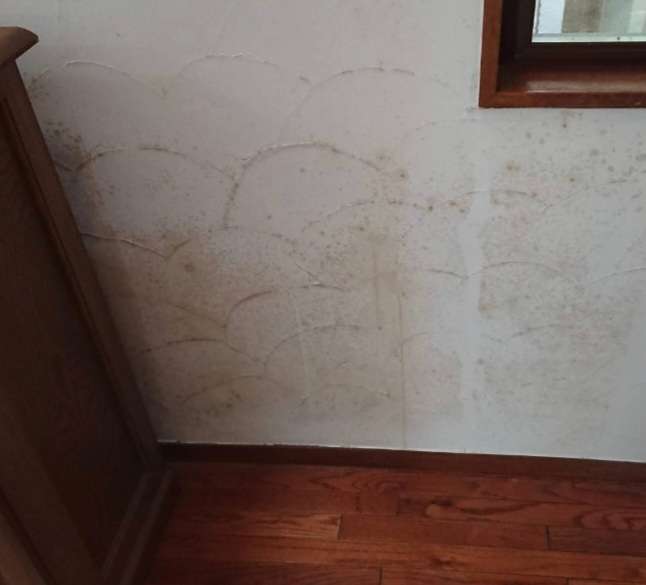
Look at window frames, curtains, accessible wall corners, storage spaces and the area around the bed. Note water droplets, staining, peeling finishes or items that stay damp. Check only areas you can reach safely; do not move heavy furniture or open electrical fittings.
Photograph the wider area as well as the stain, and note the date. An odor or discoloration can have more than one cause. It does not establish that a wall cavity is contaminated.

Airtight homes need appropriate moisture management
Airtightness alone does not establish a defect or a mold problem.
A modern home is not automatically more mold-prone than an older home. Insulation, ventilation, leaks, surface temperatures and daily use all matter. A room can look dry while a particular surface remains damp.
Follow the building and equipment instructions for ventilation and maintenance. If moisture persists, ask a suitable building professional to investigate before changing the ventilation system or adding insulation. The appropriate solution depends on the construction and the source of water.
Describe the pattern rather than guessing the source
Timing can help the investigation.
Record whether a stain appears after rain, whether condensation occurs in the morning, and whether the same spot returns after cleaning. Include previous plumbing work or leaks if known. These observations help a contractor plan an inspection.
A musty smell does not prove that mold is inside a wall. Headaches, coughing or poor sleep do not identify a building defect. Share health observations with your clinician and building observations with the property manager or inspector.
When fungal sampling may be useful
Ask what decision the sample will support.
Sampling is not automatically required in every bedroom. Before commissioning it, ask about the purpose, sampling locations, method, cost and reporting limits. A result describes the material or air sampled under those conditions; it does not represent every room or hidden space.
Environmental testing cannot diagnose an allergy, prove a symptom was caused by the room, or certify that CPAP use is medically safe. Inspection findings should be considered alongside visible conditions and the moisture investigation.
Moisture readings need context
Material, location and method affect interpretation.
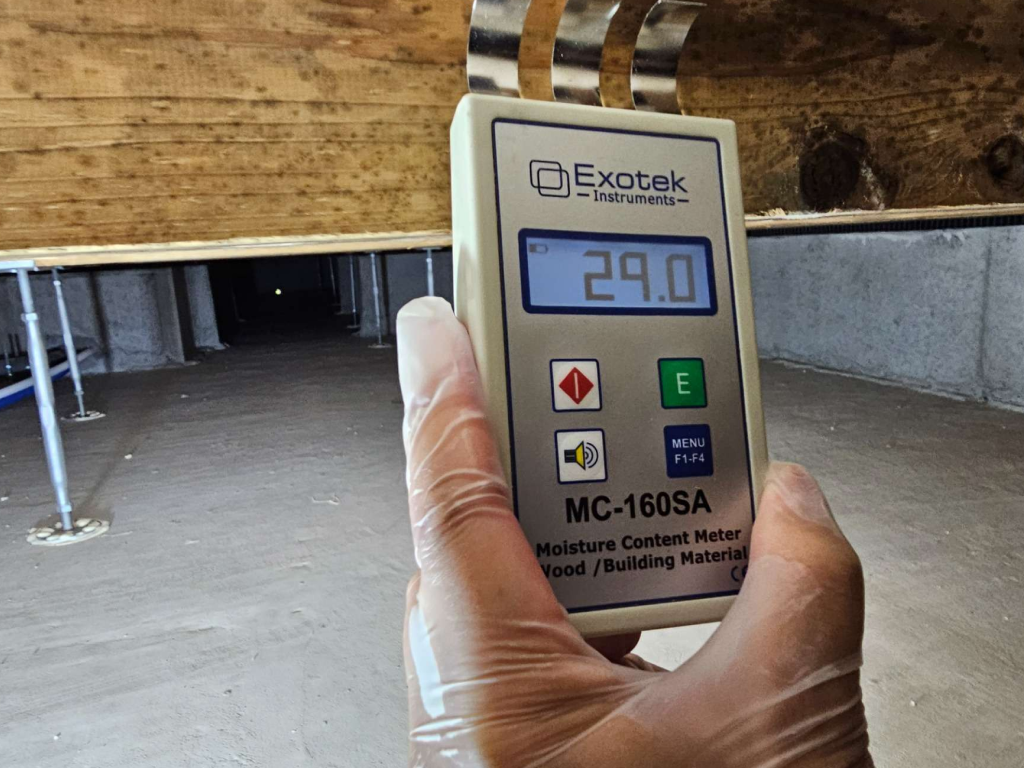
A moisture inspection can help map damp areas or compare changes over time. Ask the inspector to record the material, instrument, measurement positions and conditions. Readings from different materials or methods should not be treated as interchangeable.
A single reading does not prove that all layers are dry or locate every source of water. Repeated measurements and a check for continuing leaks may be needed before finishes are restored.
Looking inside walls has practical limits
Confirm access and restoration before opening a surface.
A small inspection camera may help where a suitable opening exists. Its view is limited by access, insulation and obstructions. It cannot see an entire wall or guarantee that no mold exists outside the field of view.
Additional access may require an opening or removal of a finish. Agree on the location, permission, restoration and cost first. Tenants should coordinate with the owner or property manager rather than opening walls themselves.
Airflow and pressure are different measurements
Use the right instrument for the question.
Ventilation assessment may include airflow measurements and pressure differences between spaces. An airflow meter does not directly measure pressure difference; pressure assessment requires suitable instrumentation and a defined reference.
Record whether doors, windows and fans were open or operating. A negative-pressure reading alone does not prove that mold is entering the room. Any proposed air pathway and moisture source need supporting observations.
Recurring mold needs attention to water sources
Removal and building repair may be separate jobs.
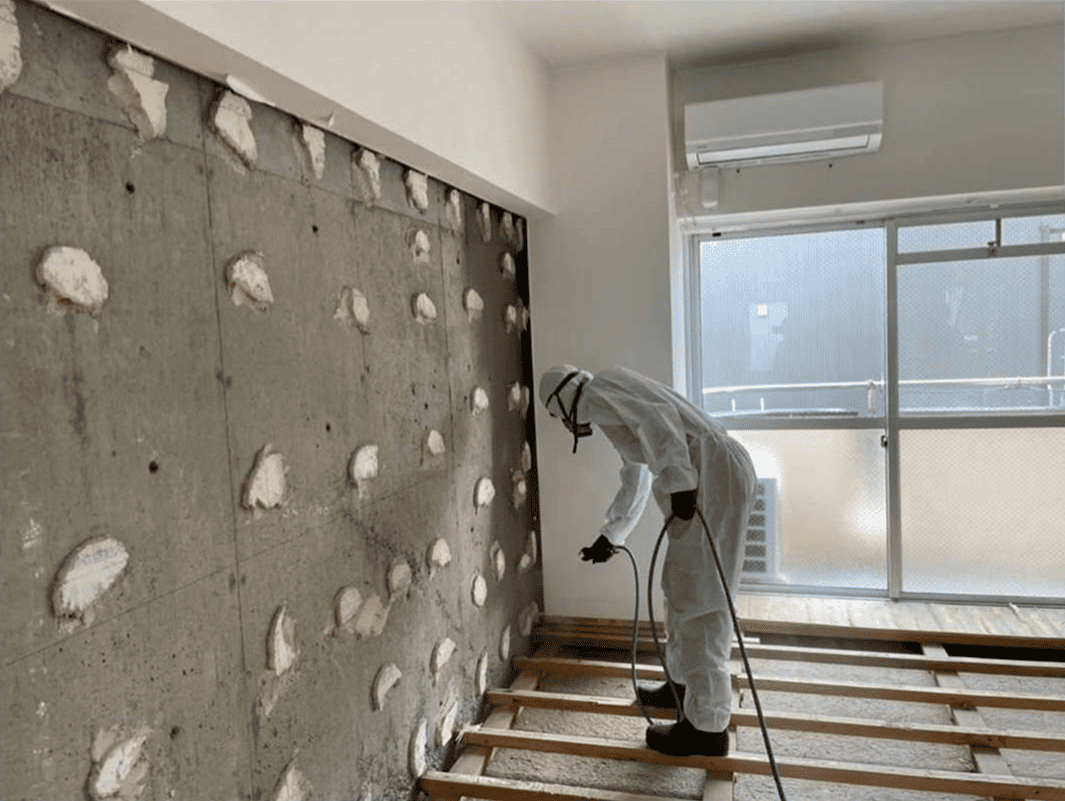
If water continues to reach a surface, mold may return after cleaning. Leak repair, drying, ventilation adjustments and removal or replacement of damaged material can involve different specialists. Ask who will coordinate the work.
Before remediation, agree on the treatment area and any areas that remain uninspected. No treatment name alone guarantees complete removal, permanent prevention, or that a bedroom is suitable for every medical situation.
Keep CPAP care within the manufacturer’s instructions
Room cleaning products are not equipment-cleaning instructions.
Follow the cleaning schedule and methods for your particular CPAP and accessories. The FDA emphasizes following the manufacturer because machines and parts differ. Ask the equipment provider about filters, water chambers, drying, replacement and any suspected contamination.
Do not put household mold-removal products into the device or improvise a cleaning process from a building article. If considering an additional cleaning device, first check its compatibility and the instructions for your CPAP.
What to tell your CPAP provider
Keep the model name and identify the affected part: the mask, hose, humidifier chamber, filter or outside of the machine. Describe what you noticed and when, without opening the housing or trying to identify an organism by its color. A photograph may help the provider understand a visible mark, but it does not establish whether an internal component is contaminated.
Ask whether the part should be inspected, cleaned according to its instructions or replaced, and how to maintain prescribed treatment while the concern is resolved. If the next treatment session is approaching, contact the prescribing team or equipment provider promptly for a specific plan. A building contractor cannot make that decision from a bedroom inspection.
Use the instructions for the actual component
The FDA recommends following the manufacturer's cleaning instructions because machines and accessories differ. Do not apply a wall-cleaning dilution, soaking time or chemical to medical equipment. Keep household mold products separate from CPAP supplies, and confirm which parts are reusable and which require replacement with the equipment provider.
The FDA also explains that an add-on bacterial reduction device does not replace the manufacturer's regular cleaning process. Do not interpret a claim about a particular accessory as proof that an entire CPAP machine or bedroom has been made safe. Check the exact intended use and compatibility before considering an additional device.
Prepare for a building inspection in Japan
Share the location, photographs and access arrangements.
For a consultation with MIST Method® Mold Busters headquarters, provide the property location, building type, affected areas, dates and previous cleaning or leak repairs. Explain whether the landlord or property manager has been informed. Confirm the service area, schedule, language support and inspection fees before arranging a visit.
For remediation, ask about moving equipment and belongings, restricting access, ventilation and re-entry conditions. Coordinate any medical restrictions with your clinician; do not assume that a room can be used immediately after work.
Plan equipment movement before remediation
Tell the building contractor that medical equipment is normally kept in the room. Agree on when belongings must be moved and which areas are part of the work zone. Ask the equipment provider about handling or servicing equipment that may already be contaminated; moving it elsewhere does not resolve that separate question.
If temporary sleeping arrangements are needed, discuss continuity of treatment with the clinical team and the room-access conditions with the contractor. Avoid relying on a fixed number of hours quoted for a different property. The actual work, products and ventilation conditions should be explained for your room.
Keep a short record that each provider can use
For the building discussion, record the room, damp surfaces, dates, leaks and previous cleaning. For the equipment discussion, record the model, affected component, maintenance performed and the provider's advice. Keep symptoms in a separate timeline for the clinician. These records can be aligned by date without treating a coincidence as proof of a cause.
After building work, request a record of treated areas, moisture repairs and remaining limitations. After equipment advice, keep the separate cleaning or replacement instructions. A completed room job does not automatically close the equipment concern, and a serviced machine does not repair a damp wall.
Evaluate experience and service claims carefully
Ask for examples relevant to the proposed work.
When comparing contractors, look for the building type, material, scope of work, moisture correction and follow-up conditions in their case examples. Work at a different facility does not establish a health outcome for a CPAP user.
This guide does not use unverified government-facility work, endorsements or overseas availability as evidence of treatment effectiveness. Confirm the actual service scope for your property directly with the provider.
Questions to ask before proceeding
Keep treatment decisions with your clinical team.
Does every CPAP user need a bedroom mold test?
No blanket requirement is established here. Ask what question the proposed test will answer.
Can a low mold count prove my symptoms are unrelated to the room?
No. A limited environmental sample cannot make that medical determination.
Can remediation replace device maintenance?
No. Follow the device instructions and speak to your equipment provider separately.
What should I receive after building work?
A clear record of the areas treated, moisture issues addressed, remaining limitations and any agreed follow-up. Keep that information for future property discussions.
相談・関連情報と参考資料
------------------------------------------------------------------------------------------------------------------------
カビ取り・カビ対策専門業者MIST工法カビバスターズ本部
0120-052-127(平日9時から17時)
カビの救急箱
【検査機関】
一般社団法人微生物対策協会
------------------------------------------------------------------------------------------------------------------------