
Tested Positive for Mold Allergy? The Next Step Is a Professional Indoor Mold Inspection and Environmental Microbial Assessment
2026/06/19
Have you recently received allergy test results showing a positive reaction to mold?
If so, you are not alone. Every year, many people experience persistent symptoms such as coughing, sneezing, nasal congestion, itchy eyes, headaches, fatigue, asthma flare-ups, or unexplained respiratory discomfort. After visiting a hospital or allergy specialist, they often discover that mold is one of the allergens affecting their health.
However, an important question remains:
Where is the mold coming from?
Medical allergy testing can determine whether your immune system reacts to mold spores, but it cannot identify the actual source of exposure within your living environment. In other words, knowing that you are allergic to mold is only the first step. The next and most critical step is determining whether your home, workplace, or another frequently occupied environment contains elevated levels of mold contamination.
Modern buildings are becoming increasingly airtight and energy efficient. While this improves comfort and energy savings, it can also create conditions where moisture becomes trapped inside walls, ceilings, crawl spaces, insulation systems, and hidden building cavities. As a result, mold can grow in locations that are completely invisible to occupants.
Many homeowners are surprised to learn that visible mold represents only a small portion of the problem. Hidden mold colonies may be actively releasing spores and microbial fragments into indoor air without any obvious visual signs. This is why environmental fungal testing has become increasingly important when investigating mold-related health concerns.
At MIST Method® Mold Busters Headquarters, we believe that successful mold remediation begins with accurate diagnosis. Simply removing visible mold stains is not enough. Unless the root cause of moisture intrusion, condensation, ventilation imbalance, or building pressure issues is identified and corrected, mold can quickly return.
To uncover hidden contamination, our investigations may include:
✅ Indoor airborne fungal testing
✅ Surface and material fungal sampling
✅ Professional fungal species identification in collaboration with microbial testing specialists
✅ Building material moisture content measurements
✅ Wall cavity inspections using fiber-optic scopes
✅ Negative pressure and airflow diagnostics using professional airflow meters
✅ Moisture source investigations and building condition assessments
These scientific diagnostic methods help identify not only where mold exists but also why it developed in the first place.
In collaboration with the microbial testing expertise of the General Incorporated Association for Microbial Control, environmental fungal testing can provide valuable insight into the relationship between indoor mold exposure and allergy symptoms. By comparing indoor and outdoor fungal conditions and identifying specific mold species, homeowners can make informed decisions regarding remediation and long-term prevention.
If you or a family member has tested positive for mold allergies, do not stop at the medical diagnosis. Consider investigating the environment where exposure may be occurring.
MIST Method® Mold Busters provides nationwide support throughout Japan for complex mold problems. Through scientific inspection, moisture analysis, fungal testing, airflow measurements, and hidden cavity investigations, we help identify the true causes of mold contamination and develop effective long-term solutions.
Remember: mold rarely appears without a reason. Finding and correcting the cause is the key to preventing recurrence and protecting both your building and your health.
If you are concerned about mold exposure, we strongly recommend professional fungal testing and environmental assessment before the problem becomes more serious.
目次
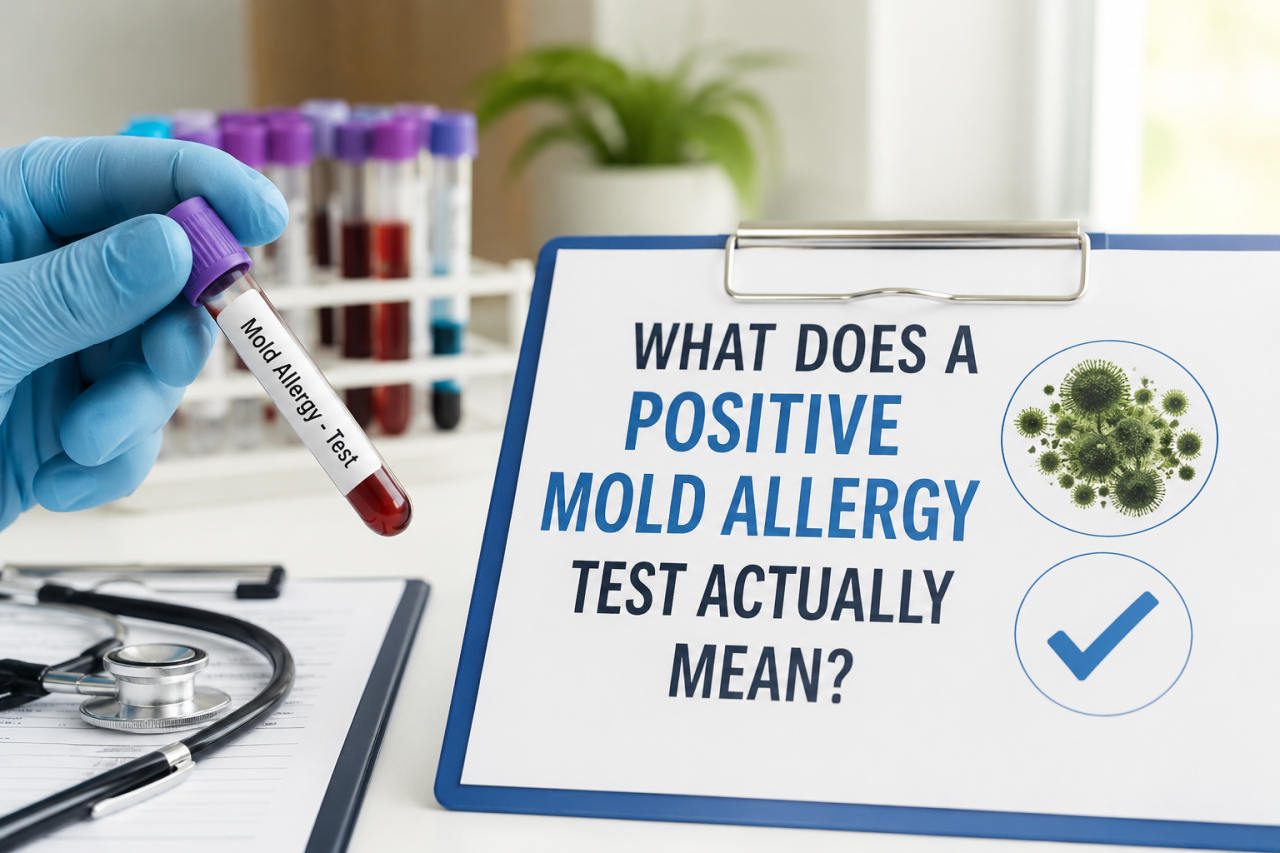
What Does a Positive Mold Allergy Test Actually Mean?
Understanding the Difference Between Being Allergic to Mold and Being Exposed to Mold in Your Home
A Japanese doctor explaining allergy test results to a patient.
A close-up photograph of an allergy test report showing mold sensitivity.
An infographic illustrating "Mold Allergy ≠ Mold Source Identified."
A Japanese family discussing health concerns at home.
A simple illustration comparing "Medical Diagnosis" and "Home Environmental Investigation."
Many people feel relieved when they finally receive an explanation for their persistent symptoms.
After months or even years of coughing, sneezing, nasal congestion, itchy eyes, asthma attacks, headaches, or unexplained fatigue, a hospital visit may reveal an important finding:
"You tested positive for mold allergy."
While this diagnosis can provide answers, it also raises many new questions.
Where is the mold exposure occurring?
Is there mold growing inside my house?
Should I move?
Can cleaning visible mold solve the problem?
Are my family members also being exposed?
The truth is that a positive mold allergy test is only the beginning of the investigation.
A Positive Allergy Test Does Not Automatically Mean Your House Has Mold
One of the most common misunderstandings is believing that a positive allergy result automatically proves that mold is growing inside the home.
This is not always true.
Medical allergy testing identifies whether your immune system reacts to mold allergens. It does not identify the location of exposure.
People are exposed to mold spores every day because mold naturally exists in the environment.
Common outdoor sources include:
Soil
Trees and vegetation
Decaying leaves
Agricultural areas
Compost piles
Parks and forests
Indoor exposure can also occur in many places, including:
Homes
Workplaces
Schools
Offices
Vehicles
Public buildings
Therefore, a positive allergy test simply means:
Your immune system recognizes mold as an allergen and may react when exposed.
The test does not determine:
❌ Where exposure occurred
❌ Which building contains mold
❌ How much mold is present
❌ Whether hidden mold exists inside walls
❌ Whether your symptoms are directly caused by your home
These questions require environmental investigation.
Sensitization and Exposure Are Different Concepts
Medical professionals often distinguish between sensitization and exposure.
Sensitization
Sensitization means your immune system has developed antibodies against mold allergens. In simple terms, your body has become "sensitive" to mold.
However, sensitivity alone does not necessarily mean you are currently being exposed to unhealthy levels of mold indoors.
Exposure
Exposure refers to the actual contact with mold spores, fragments, or microbial particles in your environment.
When individuals who are sensitive to mold spend extended periods in buildings with elevated airborne fungal concentrations, symptoms may become significantly worse.
This is why identifying the environmental source of exposure is so important.
Why Some People Become Sick While Others Do Not
You may notice that one family member experiences severe symptoms while others living in the same house remain relatively healthy.
This difference is common.
Individual responses depend on many factors, including:
Genetic predisposition
Existing allergies
Asthma or respiratory disease
Immune system status
Age
Duration of exposure
Overall health condition
Infants, older adults, and immunocompromised individuals may be particularly vulnerable to mold exposure.
Because every person's sensitivity differs, relying solely on symptoms is not an effective way to determine whether a building has a mold problem.
Scientific environmental testing provides much more reliable information.
Why Environmental Mold Testing Is the Logical Next Step
If you have tested positive for mold allergy and continue experiencing symptoms at home, professional environmental mold testing should be strongly considered.
Environmental investigations can help answer critical questions such as:
✅ Are indoor mold levels elevated?
✅ Is hidden mold growing inside walls or ceilings?
✅ Which fungal species are present?
✅ Are indoor concentrations higher than outdoor levels?
✅ Is excessive moisture contributing to mold growth?
✅ Are ventilation or pressure problems affecting indoor air quality?
At MIST Method® Mold Busters Headquarters, comprehensive investigations may include:
Airborne fungal sampling
Surface and material sampling
Fungal species identification
Indoor/outdoor comparative analysis
Building material moisture measurements
Fiber-optic inspections inside wall cavities
Airflow and negative pressure diagnostics using professional instruments
In collaboration with microbial testing specialists, these scientific assessments can help determine whether the indoor environment is contributing to ongoing symptoms.
Key Takeaway
A positive mold allergy test tells you that your body reacts to mold.
It does not tell you where mold exposure is occurring.
If symptoms continue, especially while spending time indoors, investigating your living environment becomes the next essential step.
Identifying hidden mold, moisture problems, and building-related causes early can help protect both your health and your home.

Why Medical Allergy Testing Alone Is Not Enough
Hospitals Can Diagnose Mold Allergies, but They Cannot Identify Hidden Mold Sources Inside Buildings
A Japanese physician reviewing allergy test results with a patient.
An infographic comparing "Medical Diagnosis" and "Environmental Investigation."
A simple illustration showing hidden mold inside walls despite a clean-looking room.
A Japanese family wondering why symptoms continue at home.
An environmental investigator collecting indoor air samples.
After receiving a positive mold allergy test result, many people assume that the next step is obvious.
"I know I'm allergic to mold, so now I just need medication."
While medical treatment is extremely important, it is only one part of the overall solution.
Many patients continue experiencing symptoms despite receiving appropriate medical care. They may take allergy medications, use inhalers, or avoid visible mold, yet symptoms persist.
Why does this happen?
The answer is simple:
Medical testing can identify the patient, but it cannot identify the building-related source of exposure.
What Medical Allergy Testing Can Tell You
Healthcare providers use various tests to determine whether a person has developed sensitivity to mold allergens.
Common medical tests include:
Skin prick testing
Blood tests for mold-specific IgE antibodies
Pulmonary function tests
Clinical symptom evaluation
These tests are extremely valuable because they help physicians:
✅ Determine whether mold may be triggering symptoms.
✅ Identify allergic sensitivity.
✅ Assess respiratory health.
✅ Develop treatment strategies.
However, these tests have important limitations.
They cannot answer questions such as:
❌ Is mold growing behind the walls?
❌ Are airborne mold levels elevated inside the home?
❌ Is the HVAC system contaminated?
❌ Is there excessive moisture inside building materials?
❌ Is condensation occurring inside hidden building cavities?
❌ Are pressure imbalances drawing mold-contaminated air into living spaces?
In short, doctors diagnose people—not buildings.
Hidden Mold Frequently Goes Undetected
One of the biggest challenges in modern homes is that mold growth is often invisible.
Many homeowners expect mold to appear as obvious black staining on walls or ceilings. However, hidden mold can develop in areas that occupants never see.
Common hidden mold locations include:
Inside wall cavities
Behind wallpaper
Under flooring materials
Inside ceiling spaces
Crawl spaces
Attics
HVAC systems
Around plumbing penetrations
Behind cabinets and furniture
Around poorly insulated exterior walls
In highly airtight buildings, these hidden reservoirs may continuously release spores into indoor air.
As a result, occupants may experience ongoing symptoms even though no visible mold is present.
Modern Buildings Can Hide Serious Moisture Problems
Today's energy-efficient buildings are designed to reduce heat loss and improve comfort.
While these features offer many benefits, they can also create unintended consequences.
Moisture may become trapped inside building assemblies due to:
Condensation
Water intrusion
Plumbing leaks
Insufficient ventilation
Negative pressure conditions
Construction moisture
High indoor humidity
When moisture remains trapped, mold growth can occur inside walls long before visible signs appear.
This is why simply cleaning visible surfaces often fails to solve the problem.
Without identifying and correcting the underlying moisture source, mold frequently returns.
Environmental Testing Completes the Investigation
If medical testing suggests mold sensitivity and symptoms continue indoors, environmental testing becomes the logical next step.
Professional indoor environmental investigations may include:
Airborne Fungal Sampling
Air samples help determine whether indoor mold concentrations exceed normal background levels.
Surface and Material Sampling
Suspected surfaces or building materials can be analyzed to identify specific fungal species.
Moisture Content Assessment
Excess moisture inside drywall, wood, or insulation often indicates hidden mold risk.
At MIST Method® Mold Busters Headquarters, professional moisture meters are used to evaluate building material moisture conditions scientifically.
Fiber-Optic Wall Cavity Inspection
Hidden areas inside walls and ceilings can often be inspected using fiber-optic cameras without extensive demolition.
This allows investigators to confirm hidden moisture damage and mold growth.
Airflow and Pressure Diagnostics
Modern buildings frequently experience pressure imbalances.
Using professional airflow instruments, investigators can evaluate whether negative pressure conditions are drawing contaminated air from wall cavities, crawl spaces, or attics into occupied spaces.
Why Identifying the Cause Is Essential
Removing mold without understanding why it developed is similar to treating symptoms without diagnosing the disease.
Mold growth almost always occurs because moisture and environmental conditions allow it.
Successful long-term prevention requires investigators to answer three essential questions:
Where is mold present?
Why did mold develop?
How can recurrence be prevented?
At MIST Method® Mold Busters Headquarters, investigations focus not only on identifying mold contamination, but also on determining the root causes through moisture measurements, wall cavity inspections, pressure diagnostics, and environmental assessment.
Because in modern buildings, failure to correct the underlying cause often leads to mold recurrence.
Key Takeaway
Medical allergy testing is an essential first step.
However, if symptoms continue, identifying the environmental source of exposure becomes equally important.
A comprehensive environmental investigation can reveal hidden mold, moisture problems, ventilation deficiencies, and building conditions that may be contributing to ongoing health concerns.
Only by combining medical evaluation with environmental assessment can homeowners gain a complete understanding of their mold exposure risks.

Common Signs That Your Home May Be Contributing to Your Symptoms
Recognizing the Warning Signs of Hidden Indoor Mold and Poor Indoor Air Quality
A Japanese family experiencing sneezing or coughing inside their home.
A homeowner noticing condensation on windows during winter.
A close-up photograph of mold around a window frame or air conditioner.
An infographic showing common hidden mold locations inside a house.
A Japanese homeowner inspecting a damp wall with concern.
After receiving a positive mold allergy test result, many people begin asking an important question:
"Could my home be making me sick?"
This is a reasonable concern.
Because modern people spend approximately 80% to 90% of their time indoors, the indoor environment can significantly influence overall health. If hidden mold is present inside a building, continuous exposure to airborne spores and microbial particles may contribute to persistent symptoms.
However, how can homeowners determine whether their house may be involved?
Fortunately, buildings often provide warning signs.
Recognizing these signs early can help identify problems before they become severe.
Sign #1: Symptoms Improve When You Leave the House
One of the most important clues is a change in symptoms based on location.
Ask yourself the following questions:
Do symptoms improve when you leave home?
Do you feel better during vacations or business trips?
Are symptoms worse after sleeping?
Do symptoms return shortly after arriving home?
If symptoms consistently improve away from the building and worsen indoors, environmental exposure should be considered.
Although this pattern does not prove mold contamination, it strongly suggests that further investigation may be warranted.
Sign #2: Persistent Condensation Inside the Home
Excess moisture is the primary factor that allows mold to grow.
Frequent condensation may indicate elevated indoor humidity or hidden moisture problems.
Common examples include:
Water droplets on windows.
Wet window frames every morning.
Condensation on metal surfaces.
Moisture around exterior walls.
Damp closets and storage areas.
Many homeowners simply wipe condensation away without investigating the cause.
However, repeated condensation often means moisture is accumulating within the building.
Over time, this can create ideal conditions for hidden mold growth.
Sign #3: Musty or Earthy Odors
A persistent musty smell is one of the most recognizable indicators of mold contamination.
People frequently describe mold odors as:
Damp
Earthy
Stale
Musty
Similar to wet cardboard
Interestingly, odors may be strongest:
After rainfall.
Early in the morning.
After returning home following an absence.
When heating or cooling systems begin operating.
Because odor-producing microbial compounds can travel through building cavities, the source may not be located where the smell is noticed.
Professional investigation is often necessary to identify the origin.
Sign #4: Visible Water Damage or Past Leaks
Previous moisture events can increase the risk of hidden mold growth.
Consider whether your home has experienced:
Roof leaks
Plumbing leaks
Flooding
Water intrusion from storms
Condensation damage
Foundation moisture problems
Even if repairs were completed, moisture trapped inside walls or insulation may still support mold growth.
Many hidden mold problems originate from old water incidents that homeowners believed had already been resolved.
Sign #5: Visible Mold Is Present
Visible mold should never be ignored.
Common locations include:
Window frames
Bathroom ceilings
Air conditioning units
Closets
Wallpaper surfaces
Around sinks and plumbing fixtures
However, visible mold is often only the "tip of the iceberg."
The presence of visible mold may indicate that hidden contamination exists elsewhere within the building.
Simply cleaning the surface may not eliminate the underlying problem.
Sign #6: Family Members Experience Similar Symptoms
If multiple occupants experience symptoms, environmental exposure becomes increasingly likely.
Symptoms may include:
Sneezing
Nasal congestion
Chronic coughing
Wheezing
Eye irritation
Headaches
Fatigue
Worsening asthma
Children, older adults, and individuals with respiratory conditions may experience symptoms first because they are often more sensitive.
When several household members are affected, professional environmental assessment should be strongly considered.
Sign #7: The Building Has Poor Ventilation or Airflow Problems
Modern airtight buildings require balanced ventilation systems.
When ventilation is inadequate, indoor humidity may rise and contaminants can accumulate.
Negative pressure conditions may also draw air from:
Wall cavities
Crawl spaces
Attics
Ceiling voids
If these hidden areas contain mold, contaminated air may enter occupied living spaces.
At MIST Method® Mold Busters Headquarters, airflow measurements and negative pressure diagnostics are performed using professional instruments to evaluate whether building pressure conditions may be contributing to mold exposure.
When Multiple Warning Signs Are Present
A single sign does not necessarily confirm mold contamination.
However, when several signs occur simultaneously, the likelihood of an indoor environmental problem increases.
For example:
✓ Positive mold allergy test
✓ Symptoms worsen at home
✓ Frequent condensation
✓ Musty odors
✓ History of water damage
✓ Visible mold growth
Together, these findings strongly suggest that environmental investigation should be considered.
Key Takeaway
Your home may be contributing to ongoing symptoms if warning signs such as condensation, musty odors, water damage, poor ventilation, or symptom patterns are present.
Because hidden mold often remains invisible, scientific environmental testing is frequently necessary to determine whether indoor exposure is occurring.
Early investigation can help identify hidden problems, reduce exposure, and prevent further building damage.
If you suspect your indoor environment may be affecting your health, professional fungal testing and comprehensive building assessment are highly recommended.
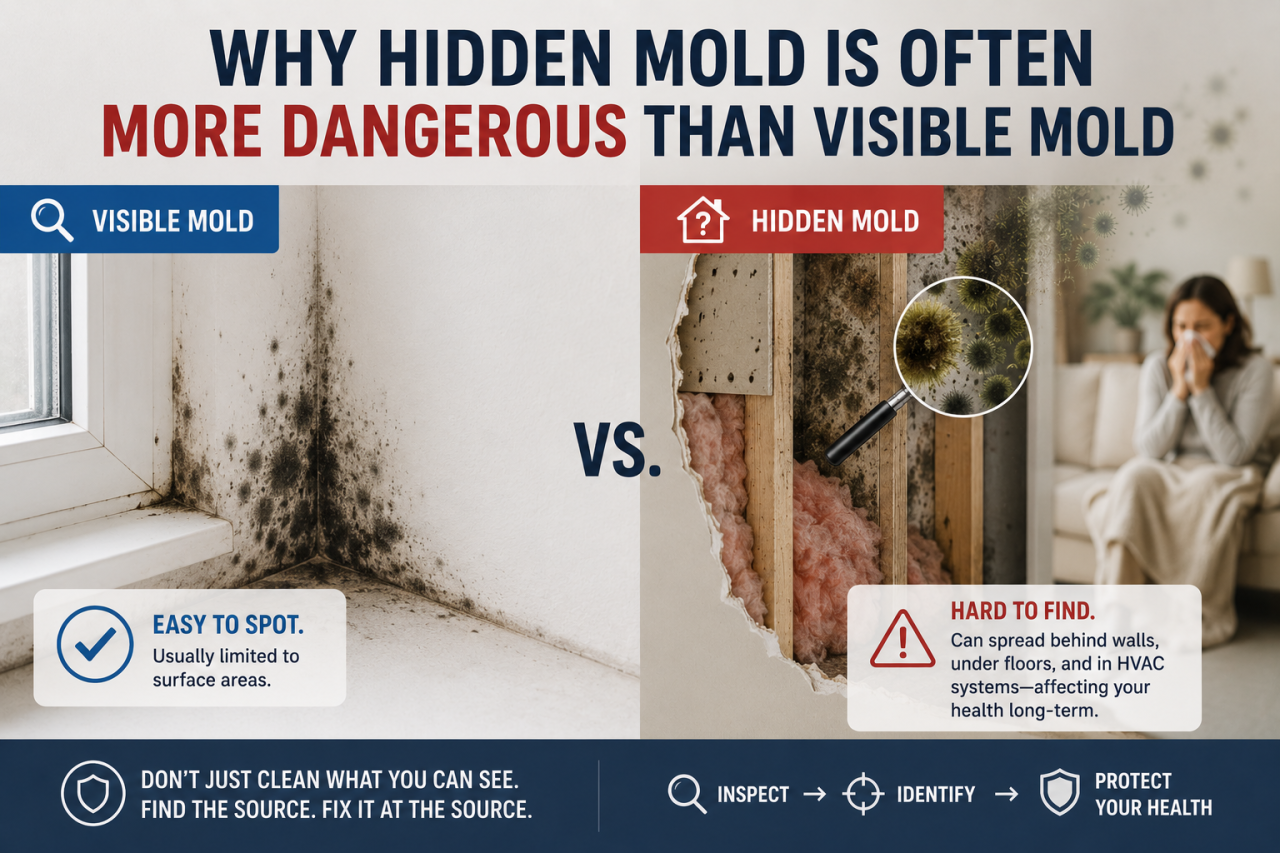
Why Hidden Mold Is Often More Dangerous Than Visible Mold
Understanding How Mold Growing Behind Walls and Ceilings Can Affect Your Health Without Being Seen
A cross-sectional illustration showing mold growing inside a wall cavity.
An infographic comparing visible mold and hidden mold.
A Japanese homeowner looking at a clean wall while hidden mold is illustrated behind it.
A fiber-optic camera inspection inside a wall cavity.
A diagram showing mold spores moving from wall cavities into indoor living spaces.
When people think about mold, they usually imagine black stains growing on bathroom ceilings, window frames, or wallpaper.
Visible mold is certainly a concern.
However, one of the most important facts homeowners should understand is this:
The mold you can see is not always the mold causing your symptoms.
In many cases, the most significant mold contamination is hidden inside the building itself.
Modern homes can contain extensive mold growth behind walls, above ceilings, beneath flooring, or inside insulation materials while appearing perfectly clean on the surface.
This is why many individuals continue suffering from allergy symptoms even though they cannot find any obvious mold inside their homes.
Hidden Mold Can Grow Where You Never Look
Mold requires only three things to grow:
Moisture
Organic material
Suitable temperature
Unfortunately, modern buildings provide many concealed locations where these conditions exist.
Common hidden mold locations include:
Inside Wall Cavities
Condensation, plumbing leaks, or water intrusion can create ideal conditions for mold growth inside walls.
Because drywall hides the affected area, contamination may continue for months or years without detection.
Above Ceilings
Roof leaks, attic condensation, and HVAC problems frequently result in hidden mold growth above ceiling materials.
Beneath Flooring
Water damage from spills, flooding, or plumbing leaks may allow mold to develop beneath flooring systems.
Inside Insulation Materials
Wet insulation often remains damp for extended periods, creating ideal conditions for fungal colonization.
Inside HVAC Systems
Heating and cooling systems may distribute mold spores throughout the entire building if contamination develops within ducts or equipment.
A Home Can Look Clean While Still Containing Significant Mold
One of the greatest challenges in mold investigations is that appearance alone cannot determine whether a building is healthy.
Many homeowners say:
"My house looks clean, so I don't think mold is the problem."
Unfortunately, hidden mold investigations frequently prove otherwise.
At MIST Method® Mold Busters Headquarters, hidden contamination is regularly discovered in homes that appear spotless.
Because modern construction methods emphasize energy efficiency and airtightness, moisture can become trapped inside building assemblies without producing visible warning signs.
As a result, homeowners may unknowingly live with elevated airborne fungal concentrations for extended periods.
How Hidden Mold Affects Indoor Air Quality
Even when mold is concealed behind walls or ceilings, it may still affect indoor air.
Mold colonies release:
Spores
Fungal fragments
Volatile organic compounds (MVOCs)
Allergens
Air movement within buildings can transport these particles into occupied spaces.
Contaminated air may travel through:
Electrical penetrations
Pipe openings
Cracks and gaps
Recessed lighting fixtures
HVAC systems
Wall and ceiling cavities
Occupants may therefore inhale mold-related particles every day without ever seeing visible mold.
Why Modern Airtight Buildings Can Increase Exposure Risks
Modern homes are designed to improve energy efficiency by reducing uncontrolled air leakage.
While this design strategy offers many benefits, it can also increase the accumulation of indoor contaminants.
In tightly sealed buildings:
Moisture may remain trapped longer.
Ventilation deficiencies may occur.
Air contaminants may accumulate indoors.
Negative pressure may pull air from hidden cavities.
If mold exists within concealed spaces, these pressure differences may continuously introduce contaminated air into living areas.
At MIST Method® Mold Busters Headquarters, professional airflow measurements and negative pressure diagnostics are performed to determine whether building pressure conditions are contributing to occupant exposure.
Scientific Investigation Is Often Necessary
Because hidden mold cannot usually be identified through visual inspection alone, scientific assessment is often required.
Professional investigations may include:
Indoor Airborne Fungal Testing
Air sampling helps determine whether indoor fungal levels are elevated.
Indoor/Outdoor Comparison Testing
Comparing indoor and outdoor fungal concentrations helps investigators determine whether abnormal indoor amplification exists.
Moisture Measurements
Building material moisture meters can identify hidden moisture problems before visible damage appears.
Fiber-Optic Wall Inspections
Fiber-optic cameras allow investigators to examine concealed spaces inside walls and ceilings with minimal disruption.
Species Identification
Laboratory analysis conducted in collaboration with microbial testing specialists can identify the fungal species present and help determine the extent of contamination.
Hidden Mold Often Returns If the Cause Is Ignored
Removing visible mold stains without addressing hidden moisture problems rarely provides a long-term solution.
If moisture remains inside the building, mold growth may quickly return.
For this reason, successful mold management requires investigators to answer three essential questions:
Where is the hidden mold located?
What moisture source allowed growth?
How can future recurrence be prevented?
At MIST Method® Mold Busters Headquarters, investigations focus on identifying both contamination and the underlying cause to reduce the risk of recurrence.
Key Takeaway
Visible mold is only part of the story.
Hidden mold growing behind walls, ceilings, and other concealed building spaces may significantly affect indoor air quality and occupant health even when no visible signs are present.
If you have tested positive for mold allergies and continue experiencing symptoms, professional environmental assessment, fungal testing, moisture investigation, and hidden cavity inspections may provide critical answers.
Early detection and root-cause investigation are essential for protecting both your health and your home.
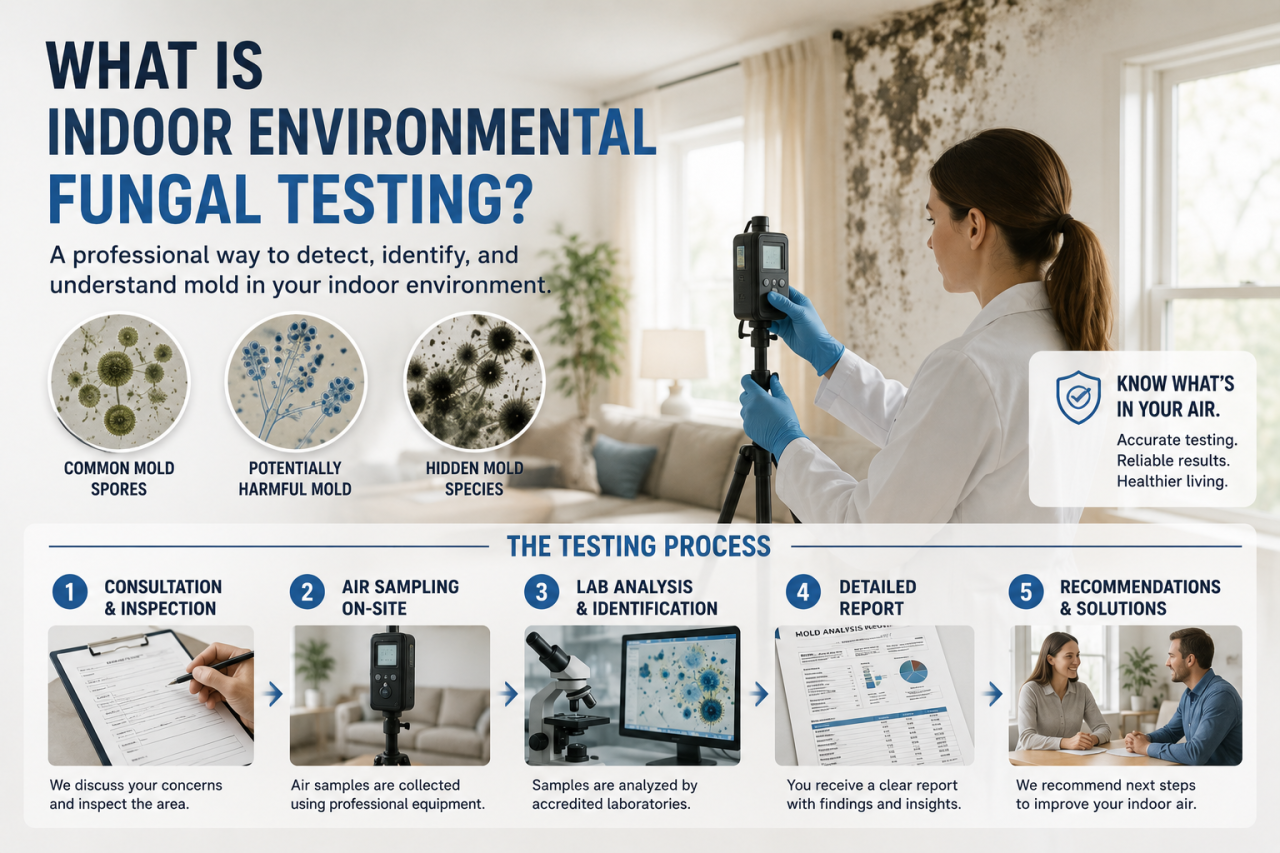
What Is Indoor Environmental Fungal Testing?
Understanding How Scientific Mold Testing Helps Identify Hidden Indoor Contamination
A professional technician collecting indoor air samples in a Japanese home.
A laboratory scientist examining fungal samples under a microscope.
An infographic illustrating the process of indoor environmental mold testing.
A photograph of professional mold sampling equipment.
A simple illustration comparing "Normal Indoor Air" and "Mold-Contaminated Indoor Air."
Many homeowners who test positive for mold allergies ask the same question:
"What exactly is environmental mold testing, and why do I need it?"
This is an excellent question.
Environmental fungal testing—sometimes called indoor mold testing or microbial assessment—is a scientific method used to evaluate whether abnormal fungal contamination exists within a building.
Unlike medical allergy testing, which evaluates the body's response to mold, environmental testing investigates the building itself.
In simple terms:
Medical testing examines people.
Environmental testing examines buildings.
When performed correctly, environmental testing can provide valuable information about indoor air quality, hidden mold growth, moisture problems, and potential exposure sources.
Why Visual Inspections Alone Are Often Not Enough
Many people assume they can determine whether mold is present simply by looking around their home.
Unfortunately, this approach has significant limitations.
As discussed in previous chapters, mold frequently develops in hidden locations such as:
Inside walls
Above ceilings
Beneath flooring
Inside insulation materials
HVAC systems
Crawl spaces
Attics
Because hidden contamination often cannot be seen, visual inspection alone may underestimate the extent of a problem.
Scientific testing helps investigators identify contamination that may otherwise remain undiscovered.
Types of Environmental Fungal Testing
Professional mold investigations typically use several testing methods.
The most appropriate approach depends on the building conditions and occupant concerns.
1. Airborne Fungal Sampling
Air sampling measures fungal spores suspended in indoor air.
Investigators collect air samples using specialized equipment and compare indoor fungal concentrations with outdoor conditions.
Air sampling can help answer important questions such as:
✅ Are indoor fungal levels elevated?
✅ Are occupants being exposed to airborne spores?
✅ Are hidden mold reservoirs likely present?
However, air sampling should never be interpreted in isolation.
Results must always be evaluated alongside building conditions, moisture findings, and occupant symptoms.
2. Surface Sampling
Surface samples are collected from suspicious areas where visible mold growth exists.
Examples include:
Walls
Ceilings
Window frames
HVAC components
Furnishings
Laboratory analysis can identify the fungal species present and assist investigators in understanding contamination patterns.
3. Material Sampling
In some situations, samples from building materials may be collected.
Examples include:
Drywall
Insulation
Wood materials
Flooring systems
Material sampling can confirm hidden fungal growth inside building assemblies.
4. Species Identification
Not all molds are the same.
Laboratory analysis can identify specific fungal genera and species, including:
Aspergillus
Penicillium
Cladosporium
Alternaria
Chaetomium
Stachybotrys
Identification of fungal species may provide important information regarding moisture history and contamination severity.
In collaboration with microbial testing specialists, laboratory identification can significantly improve environmental assessments.
Why Indoor and Outdoor Comparisons Are Important
Mold exists naturally in outdoor air.
Therefore, finding mold indoors does not automatically indicate a problem.
Professional investigators often compare indoor and outdoor fungal conditions.
This comparison helps determine whether indoor fungal amplification is occurring.
For example:
Similar indoor and outdoor fungal patterns may indicate normal conditions.
Significantly elevated indoor levels may suggest hidden contamination.
This scientific comparison is one reason professional testing is more reliable than simple home test kits.
Testing Alone Does Not Solve the Problem
One of the most important things homeowners should understand is that testing itself is only one part of the investigation.
Numbers alone rarely tell the complete story.
Successful environmental assessments also require:
Visual inspection
Moisture investigation
Building history review
Occupant interviews
Airflow assessment
Pressure diagnostics
Hidden cavity inspection
At MIST Method® Mold Busters Headquarters, investigations may include:
Moisture Content Measurements
Professional moisture meters are used to determine whether building materials contain excessive moisture.
Fiber-Optic Wall Inspections
Fiber-optic cameras allow investigators to examine hidden spaces inside walls and ceilings.
Negative Pressure and Airflow Diagnostics
Professional airflow instruments are used to evaluate whether pressure imbalances may be transporting contaminated air into occupied spaces.
Because modern buildings are increasingly airtight, identifying airflow pathways is often essential.
Why Root Cause Analysis Is Critical
Finding mold is important.
Understanding why mold developed is even more important.
Without identifying and correcting the underlying moisture source, mold contamination may recur repeatedly.
For this reason, MIST Method® Mold Busters Headquarters focuses not only on identifying mold, but also on determining:
Where contamination exists.
Why contamination developed.
How recurrence can be prevented.
This root-cause approach is essential for achieving long-term indoor environmental health.
Key Takeaway
Indoor environmental fungal testing is a scientific process designed to evaluate whether abnormal mold contamination exists within a building.
Air sampling, surface sampling, species identification, moisture assessment, airflow diagnostics, and hidden cavity inspections all contribute to a complete understanding of indoor environmental conditions.
If you have tested positive for mold allergies and continue experiencing symptoms indoors, professional environmental assessment may provide critical answers about your exposure and help guide effective long-term solutions.

Why Comparing Indoor and Outdoor Air Is Essential
How Indoor-to-Outdoor (I/O) Ratios Help Detect Hidden Mold Problems Inside Buildings
A technician collecting air samples both inside and outside a home.
An infographic comparing indoor and outdoor mold spore levels.
A split-screen illustration showing "Outdoor Air Sampling" and "Indoor Air Sampling."
A laboratory technician analyzing airborne fungal samples.
A simple diagram showing how hidden mold can increase indoor spore levels.
One of the most common questions homeowners ask during a mold investigation is:
"Why do you need to test the air outside my house?"
At first, this may seem unnecessary.
After all, if the concern is inside the home, why should outdoor air matter?
The answer is simple:
Mold naturally exists everywhere in the environment.
Outdoor air always contains fungal spores. Trees, soil, grass, leaves, gardens, and decaying organic materials continuously release mold spores into the atmosphere.
Because mold spores are naturally present outdoors, finding mold indoors does not automatically indicate a problem.
This is why professional environmental investigations compare indoor and outdoor fungal conditions.
Mold Is a Natural Part of Outdoor Air
Many homeowners are surprised to learn that every breath we take contains naturally occurring fungal spores.
Common outdoor molds include:
Cladosporium
Alternaria
Aspergillus
Penicillium
Basidiospores
The number and type of spores in outdoor air can vary significantly depending on:
Season
Weather conditions
Rainfall
Wind
Geographic location
Nearby vegetation
Agricultural activities
Because outdoor fungal levels constantly change, outdoor sampling provides an important reference point.
Without this comparison, interpreting indoor test results becomes much more difficult.
What Is the Indoor-to-Outdoor (I/O) Ratio?
Professional mold investigators frequently compare indoor fungal concentrations with outdoor concentrations.
This comparison is commonly referred to as the:
Indoor-to-Outdoor Ratio (I/O Ratio)
In simple terms:
Indoor air = the air people breathe inside the building
Outdoor air = the natural background environment
When indoor fungal concentrations are significantly higher than outdoor levels, investigators may suspect hidden indoor mold amplification.
What Can the I/O Ratio Tell Us?
Scenario 1: Indoor Levels Similar to Outdoor Levels
If indoor fungal concentrations are generally similar to outdoor conditions, this may suggest that the building is functioning normally.
In many healthy buildings:
Indoor fungal counts are lower than or similar to outdoor counts.
Indoor fungal species closely resemble outdoor species.
This pattern often indicates that no significant indoor mold amplification is occurring.
Scenario 2: Indoor Levels Significantly Higher Than Outdoor Levels
When indoor concentrations greatly exceed outdoor levels, further investigation is usually recommended.
Possible explanations include:
Hidden mold growth inside walls.
Mold contamination above ceilings.
Wet insulation materials.
HVAC contamination.
Moisture-damaged building materials.
Elevated indoor fungal levels may indicate that spores are being actively released within the building.
Scenario 3: Different Fungal Species Indoors and Outdoors
Investigators also evaluate the types of fungi present.
For example:
If outdoor air is dominated by naturally occurring environmental molds, but indoor air contains unusually high levels of water-damage-associated fungi, hidden moisture problems may be suspected.
Species identification therefore plays an important role in environmental interpretation.
Why Home Mold Test Kits Can Be Misleading
Many commercially available DIY mold test kits collect samples only inside the home.
Without outdoor comparison samples, interpretation becomes extremely difficult.
A laboratory may report:
"Mold was detected."
However, because mold is naturally present almost everywhere, this information alone may not indicate whether abnormal contamination exists.
Professional environmental investigations use indoor and outdoor comparison data to provide a much more meaningful assessment.
Air Sampling Results Must Be Interpreted Carefully
Air sampling is an important investigative tool, but numbers alone do not tell the entire story.
Results should always be interpreted alongside:
Occupant symptoms
Building history
Water intrusion history
Moisture measurements
Visual findings
Odor observations
Airflow characteristics
Pressure conditions
At MIST Method® Mold Busters Headquarters, fungal testing results are evaluated together with comprehensive building diagnostics to identify both contamination and underlying causes.
Hidden Mold May Exist Even When Air Results Appear Normal
Homeowners should understand that normal air sampling results do not always rule out hidden mold.
Some concealed mold reservoirs release spores intermittently.
Others remain isolated within wall cavities and may not be detected during a short sampling period.
For this reason, investigations may also include:
Moisture Content Measurements
Excess moisture inside building materials often indicates hidden mold risk.
Fiber-Optic Wall Inspections
Fiber-optic cameras can reveal hidden mold growth inside walls and ceilings.
Airflow and Negative Pressure Diagnostics
Pressure differences may transport contaminated air from concealed spaces into occupied rooms.
Professional airflow measurements help investigators understand these hidden pathways.
Key Takeaway
Outdoor air testing is an essential part of professional environmental mold investigations.
Comparing indoor and outdoor fungal conditions helps investigators determine whether abnormal indoor mold amplification is occurring.
Because mold naturally exists in outdoor environments, indoor results should never be interpreted without appropriate outdoor reference samples.
Combining fungal testing with moisture assessment, airflow diagnostics, and hidden cavity inspections provides the most reliable understanding of indoor environmental conditions.
If you have tested positive for mold allergies and suspect your home may be contributing to your symptoms, comprehensive environmental assessment is strongly recommended.
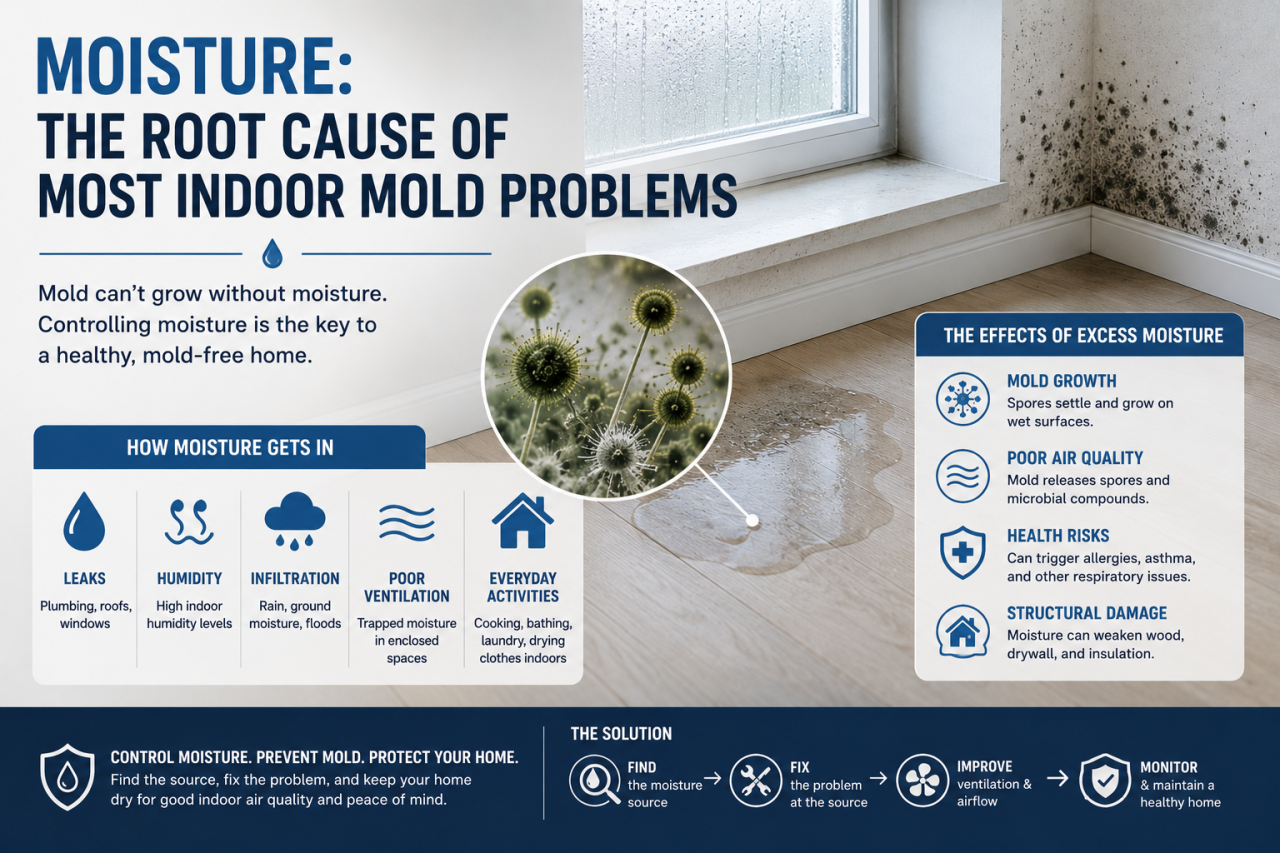
Moisture: The Root Cause of Most Indoor Mold Problems
Why Measuring Moisture Levels Is Essential for Identifying Hidden Mold Risks and Preventing Recurrence
A technician using a moisture meter on an interior wall.
A close-up image of a digital moisture meter measuring drywall moisture content.
An infographic illustrating how moisture leads to mold growth.
A Japanese homeowner noticing condensation on windows.
A cross-sectional illustration showing hidden moisture inside a wall cavity.
One of the most important facts homeowners should understand is this:
Mold cannot grow without moisture.
While mold spores are naturally present both indoors and outdoors, spores alone do not create mold problems.
For mold to actively grow and spread, excess moisture must be present.
This is why professional mold investigations focus not only on finding mold but also on identifying sources of moisture.
Simply removing visible mold without addressing moisture conditions often results in recurrence.
Why Moisture Is the Key Factor in Mold Growth
Mold spores exist almost everywhere.
Under normal conditions, these spores remain inactive.
However, when moisture becomes available, mold can begin colonizing building materials.
Common materials that support mold growth include:
Drywall
Wood framing
Wallpaper
Carpeting
Ceiling materials
Insulation
Dust and debris
If these materials remain damp for prolonged periods, mold growth may occur.
In many cases, hidden mold contamination develops long before visible signs appear.
Common Sources of Moisture Inside Buildings
Many homeowners assume that major flooding is required for mold to grow.
In reality, even small amounts of moisture can create favorable conditions.
Common moisture sources include:
Condensation
Condensation frequently occurs when warm, humid air contacts cold surfaces.
Typical locations include:
Windows
Exterior walls
Attics
Crawl spaces
Air conditioning systems
Repeated condensation can eventually lead to hidden mold growth.
Plumbing Leaks
Slow plumbing leaks are among the most common causes of hidden mold contamination.
Because leaks often occur inside walls or beneath flooring, they may remain undetected for long periods.
Roof Leaks
Water intrusion from damaged roofing systems can introduce moisture into ceilings, insulation, and wall assemblies.
Construction Moisture
New buildings sometimes contain residual moisture from construction materials.
If adequate drying does not occur, hidden mold problems may develop.
Inadequate Ventilation
Poor ventilation can allow humidity levels to increase indoors.
Bathrooms, kitchens, laundry rooms, and tightly sealed buildings are particularly vulnerable.
Why Modern Buildings Are More Vulnerable
Modern homes are designed to improve energy efficiency by reducing uncontrolled air leakage.
Although this improves comfort and lowers energy costs, it can also trap moisture inside building assemblies.
Examples include:
Highly airtight construction
Insufficient ventilation
Thermal bridging
Pressure imbalances
Improper insulation installation
As a result, moisture may accumulate behind walls or inside ceilings without obvious warning signs.
This hidden moisture frequently becomes the driving force behind mold growth.
Why Moisture Measurements Are Essential
Visual inspections alone cannot determine whether building materials contain excessive moisture.
Walls, ceilings, and floors may appear completely normal while significant moisture remains hidden within the structure.
For this reason, professional investigators use specialized moisture meters.
Moisture measurements can help answer important questions such as:
✅ Is moisture present inside building materials?
✅ Are walls drying properly?
✅ Is hidden water damage likely?
✅ Which areas require further investigation?
At MIST Method® Mold Busters Headquarters, professional moisture content measurements are routinely performed during environmental assessments.
These measurements help identify hidden moisture conditions before severe mold contamination develops.
Hidden Moisture Often Requires Additional Investigation
If elevated moisture levels are detected, additional diagnostic methods may be recommended.
These may include:
Fiber-Optic Wall Inspections
Fiber-optic cameras allow investigators to examine concealed wall and ceiling spaces with minimal disruption.
This technology can reveal:
Hidden mold growth
Water staining
Wet insulation
Structural moisture damage
Airflow and Pressure Diagnostics
Pressure differences inside buildings can transport moisture-laden air into hidden cavities.
Professional airflow measurements and negative pressure diagnostics help investigators identify these pathways.
Understanding airflow behavior is especially important in modern airtight buildings.
Why Mold Often Returns After Cleaning
Many homeowners attempt to solve mold problems by cleaning visible surfaces.
Although cleaning may temporarily improve appearance, mold frequently returns if moisture conditions remain unchanged.
This is because:
Mold growth is a symptom. Moisture is the underlying cause.
Unless the moisture source is identified and corrected, recurrence remains likely.
At MIST Method® Mold Busters Headquarters, investigations focus on identifying and correcting root causes rather than simply addressing visible contamination.
This scientific approach helps reduce the risk of future mold problems.
Key Takeaway
Excess moisture is the primary driver of indoor mold growth.
Because moisture often remains hidden inside building assemblies, professional moisture measurements are essential during environmental investigations.
Identifying and correcting moisture problems is one of the most important steps in preventing mold recurrence and protecting indoor environmental quality.
If you have tested positive for mold allergies and suspect that your home may be contributing to your symptoms, a comprehensive assessment including moisture measurements, fungal testing, and hidden cavity inspections is strongly recommended.
Investigating Hidden Mold Using Fiber-Optic Wall Inspections
How Fiber-Optic Cameras Help Detect Hidden Mold and Moisture Problems Without Major Demolition
A technician using a fiber-optic inspection camera on an interior wall.
A close-up image of a fiber-optic scope being inserted into a wall cavity.
A cross-sectional illustration showing hidden mold inside a wall and the inspection process.
A technician reviewing images from a fiber-optic inspection camera.
An infographic explaining "Visible Inspection vs. Hidden Cavity Inspection."
One of the biggest challenges in mold investigations is that the most significant contamination is often hidden from view.
Many homeowners say:
"I can't see any mold in my house, so there probably isn't a problem."
Unfortunately, this assumption is not always correct.
In modern buildings, mold frequently develops inside concealed spaces that cannot be evaluated through ordinary visual inspection.
Examples include:
Inside wall cavities
Above ceilings
Behind insulation
Around plumbing penetrations
Behind built-in furniture
Around window assemblies
Inside ceiling voids
Because these areas are hidden, specialized investigative tools are often necessary.
One of the most valuable diagnostic tools is the fiber-optic inspection camera, commonly called a fiber scope or borescope.
What Is a Fiber-Optic Wall Inspection?
A fiber-optic wall inspection is a minimally invasive technique that allows investigators to look inside concealed building cavities without extensive demolition.
Using a small inspection opening, a high-resolution camera is inserted into the wall or ceiling cavity.
This technology allows investigators to directly observe conditions inside hidden spaces.
In many situations, a small access point is sufficient to evaluate large areas within the building assembly.
As a result, investigators can obtain important information while minimizing damage to finished surfaces.
What Can a Fiber-Optic Inspection Reveal?
Fiber-optic investigations can identify many hidden building problems.
Examples include:
Hidden Mold Growth
Mold colonies growing behind drywall, inside insulation, or on structural components can often be directly observed.
Water Damage
Investigators may identify:
Water staining
Moisture-related deterioration
Damp materials
Previous leak patterns
Condensation Problems
Evidence of chronic condensation inside wall cavities can sometimes be detected.
Wet or Damaged Insulation
Insulation materials that have become wet may lose performance and support mold growth.
Structural Deterioration
Wood decay and moisture-related damage may also become visible.
Why Hidden Mold Frequently Develops Inside Walls
Many homeowners are surprised to discover mold inside walls.
However, wall cavities often provide ideal conditions for fungal growth.
Common causes include:
Condensation inside exterior walls
Plumbing leaks
Roof leaks
Window water intrusion
Construction moisture
Air leakage carrying humid air into cavities
Inadequate insulation
Thermal bridging
Because these conditions occur behind finished surfaces, contamination may continue for years without detection.
Modern Buildings Can Hide Serious Problems
Today's homes are increasingly airtight and energy efficient.
While these features improve comfort and reduce energy consumption, they can also create hidden moisture accumulation within building assemblies.
Moisture trapped inside concealed spaces may remain undetected because:
Wall surfaces appear normal.
No visible staining exists.
No obvious mold is visible.
Occupants assume the building is healthy.
However, individuals may continue experiencing allergy symptoms due to airborne spores or microbial particles originating from hidden contamination.
Fiber-Optic Inspections Complement Other Testing Methods
Although fiber-optic investigations are extremely useful, they are most effective when combined with other diagnostic techniques.
Professional environmental investigations may also include:
Moisture Content Measurements
Moisture meters help identify areas where hidden moisture is likely present.
Airborne Fungal Sampling
Air sampling helps determine whether fungal particles are entering occupied spaces.
Indoor/Outdoor Comparisons
Comparing indoor and outdoor fungal concentrations assists investigators in identifying abnormal indoor amplification.
Airflow and Pressure Diagnostics
Pressure differences may transport contaminated air from hidden cavities into living spaces.
At MIST Method® Mold Busters Headquarters, airflow measurements and negative pressure diagnostics are performed to evaluate whether hidden contaminants may be migrating through the building.
Why Direct Observation Matters
Laboratory testing provides valuable information.
However, directly observing hidden building conditions often provides critical evidence.
For example, a fiber-optic inspection may reveal:
✓ Active mold growth
✓ Water intrusion pathways
✓ Wet insulation
✓ Condensation damage
✓ Previously unknown moisture sources
Identifying these conditions helps investigators determine not only where mold exists but also why it developed.
Understanding the cause is essential for preventing recurrence.
Early Investigation Can Prevent Larger Problems
Undetected moisture and mold problems often become more severe over time.
Early investigation may help:
Reduce occupant exposure.
Prevent structural deterioration.
Lower repair costs.
Minimize future mold recurrence.
Improve indoor environmental quality.
For individuals who have tested positive for mold allergies, early environmental investigation can be particularly important.
Key Takeaway
Fiber-optic wall inspections provide investigators with the ability to examine concealed building spaces without major demolition.
Because hidden mold frequently develops inside walls, ceilings, and other inaccessible areas, direct visualization can be an essential component of a comprehensive environmental assessment.
When combined with fungal testing, moisture measurements, and airflow diagnostics, fiber-optic inspections help identify both hidden contamination and its underlying causes.
At MIST Method® Mold Busters Headquarters, fiber-optic investigations are used as part of a scientific approach to identifying mold problems and preventing recurrence.
------------------------------------------------------------------------------------------------------------------------
カビ取り・カビ対策専門業者MIST工法カビバスターズ本部
0120-052-127(平日9時から17時)
カビの救急箱
【検査機関】
一般社団法人微生物対策協会
------------------------------------------------------------------------------------------------------------------------